Stock prices change even when the regular market session has ended. For many investors, this can seem confusing because major exchanges have specific opening and closing hours.
However, trading activity does not necessarily stop when the regular session ends. Electronic markets can continue processing orders, while new information can affect what buyers and sellers are willing to pay.
The price displayed on a financial platform outside regular hours may therefore differ from the previous closing price. Understanding why stock prices change after the market closes, including the differences covered in Overnight Gaps vs Intraday Gaps, can help investors interpret price movements more accurately and avoid reacting to temporary changes without understanding what caused them.
In this blog, we will cover what happens to stock prices after regular market hours, why prices can move overnight, and the major factors that influence these changes. We will also look at how investors should interpret after-hours and pre-market movements.
What is meant by Stock Prices Change After the Market Closes?
The regular trading session may be closed, but some markets continue operating outside those hours. After-hours trading allows eligible investors to buy and sell certain securities after the main exchange session ends.
Because fewer participants are usually active during these periods, price movements can behave differently from those seen during regular hours.
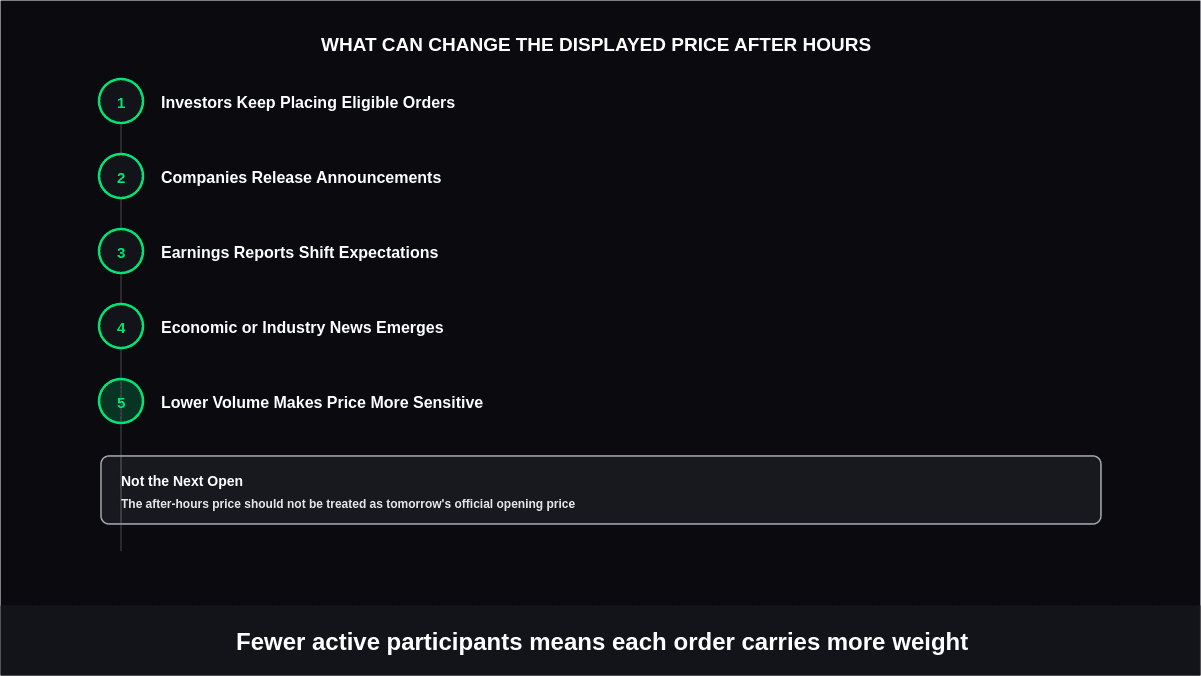
Several factors can explain a change in the displayed price:
- Investors can continue placing and executing eligible orders.
- Companies may release important announcements after the regular session.
- Earnings reports can change expectations about a company's future.
- Economic or industry news can alter investor sentiment.
- Lower trading activity can make prices more sensitive to individual orders.
The after-hours price should not automatically be treated as the next day's official opening price. Conditions can change before the next regular session begins.
5 Reasons Stock Prices Change When the Market Is Closed
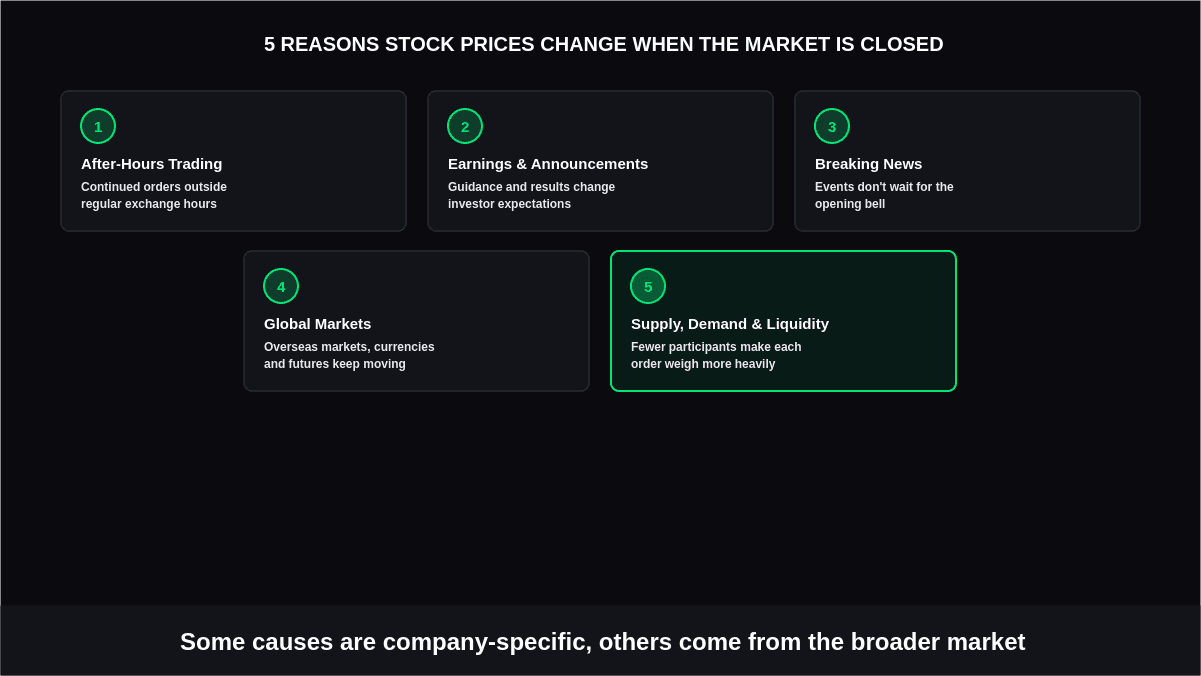
A stock can move outside regular trading hours for several different reasons. Some are connected to company-specific developments, while others come from broader markets or changing investor expectations.
Here are five important factors to understand.
1. After-Hours Trading Creates New Price Activity
One of the most direct reasons for overnight price movement is continued trading outside regular exchange hours.
Not every stock has the same level of participation after the regular session. When fewer buyers and sellers are available, individual trades can have a greater effect on the displayed price.
- Some brokers provide access to extended trading sessions.
- Trading volume is generally lower than during regular hours.
- Bid-ask spreads may become wider.
- A relatively small order can sometimes move the quoted price noticeably.
This means an after-hours move should be considered in the context of trading volume and liquidity rather than viewed in isolation.
2. Companies Release Earnings and Other Announcements
Companies often publish quarterly earnings results, financial updates, guidance, or major corporate announcements outside regular market hours.
Investors immediately evaluate whether the new information changes their expectations for the company.
For example, a business could report stronger-than-expected revenue but reduce its future guidance. Traders may react to the guidance more strongly than the headline earnings figure.
Common announcements include:
- Quarterly earnings results
- Revenue and profit updates
- Changes to financial guidance
- Management changes
- Major contracts or partnerships
- Regulatory developments
These announcements can significantly alter the price investors are willing to pay when trading is available.
3. Breaking News Changes Investor Expectations
Financial markets respond to information, and important news does not wait for the opening bell.
Political developments, regulatory decisions, industry events, product announcements, lawsuits, or unexpected company news can emerge while the regular session is closed.
Investors then reassess the potential impact on a company's future performance.
The reaction may appear in after-hours stock prices if traders can act on the information immediately. However, the initial move may change again once more investors enter the market during the next regular session.
4. Global Markets Continue Moving Overnight
U.S. stocks are connected to a global financial system that continues operating across different time zones.
While a domestic exchange may be closed, international stock markets, currencies, commodities, bonds, and futures can continue moving. Developments in these markets may influence expectations for U.S. securities.
For example:
- A major overseas market may experience a sharp decline.
- Commodity prices may change because of geopolitical developments.
- Currency movements can affect multinational companies.
- Index futures can signal changing market expectations.
These developments can contribute to the price investors see before the next regular session.
5. Supply, Demand, and Liquidity Can Shift
Price ultimately reflects the interaction between buyers and sellers. Outside regular hours, the number of active participants can be considerably smaller.
That reduced liquidity can make price movements appear more dramatic than they would during normal trading conditions.
Important considerations include:
- Fewer active participants can mean less liquidity.
- Wider spreads can increase trading costs.
- Large orders may have a greater price impact.
- A quoted price may not represent broad market consensus.
This is why investors should avoid assuming that every overnight price movement represents a firm indication of where a stock will trade throughout the next session.
How Does Pre-Market Trading Affect the Opening Price?
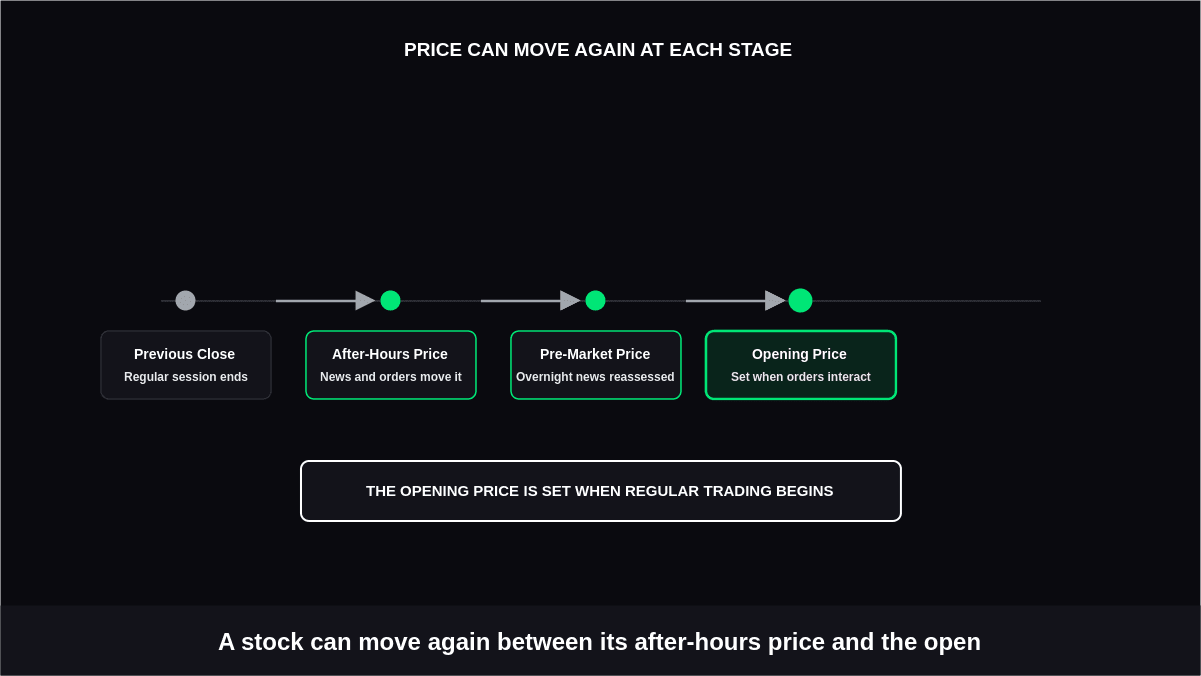
Pre-market trading takes place before the regular market session begins and can provide another indication of changing investor expectations.
Overnight news may cause a stock to trade significantly above or below its previous close during this period. However, the opening price is determined when regular-market trading begins and orders interact in the opening process.
A stock can therefore move again between its after-hours price and the next day's opening price.
Should Investors Act on Overnight Price Changes?

An overnight move can provide useful information, but it should not be treated as a complete picture.
Before making a decision, investors should consider what caused the movement, how much trading volume accompanied it, whether the underlying news is material, and whether the price remains stable as liquidity increases.
Looking only at the percentage change can hide important context.
Conclusion
Understanding why stock prices change when the market is closed makes overnight market movements easier to interpret.
Extended trading, corporate announcements, breaking news, global markets, and changing liquidity can all influence the prices investors see outside regular hours.
An after-hours move can offer useful clues about market expectations, but it does not guarantee what will happen when regular trading resumes. Investors should examine the underlying catalyst, trading activity, and broader market conditions before drawing conclusions from an overnight price change.