When you place a buy or sell order, the process does not end when the order executes. A Trade Confirmation provides a record of what happened, including the security involved, transaction price, quantity, fees, and other important details. It gives traders and investors a way to verify that an executed transaction matches what they expected.
Understanding these records is especially useful when managing multiple positions or reviewing entry exit signals in a brokerage account. A confirmation can also help identify discrepancies before they affect account records or the eventual settlement of a transaction.
In this blog you will explore what trade confirmation actually is and why it matters.
What Does a Trade Confirmation Tell You?
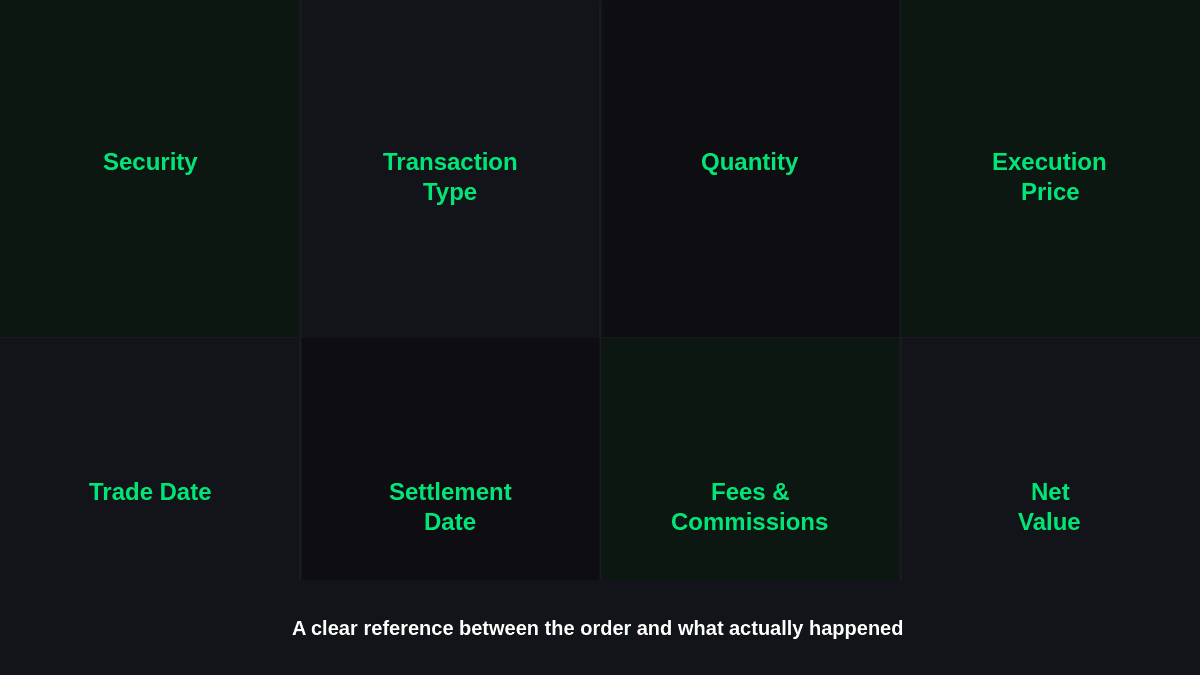
A trade confirmation is a document or electronic record showing the details of an executed transaction. Your broker or financial institution typically provides it after a trade has been completed.
Although the exact format varies between brokers and markets, confirmations commonly include:
- Security name or symbol: Identifies the asset that was bought or sold.
- Transaction type: Shows whether the transaction was a purchase or sale.
- Quantity: States the number of shares, contracts, or units involved.
- Execution price: Shows the price at which the transaction was completed.
- Trade date: Records when the trade was executed.
- Settlement date: Indicates when the transaction is scheduled to settle.
- Fees and commissions: Lists applicable costs associated with the transaction.
- Net transaction value: Shows the total amount credited or debited after applicable costs.
Together, these details provide a clear reference between the order you submitted and the transaction ultimately recorded by your broker.
How Trade Execution Leads to a Confirmation
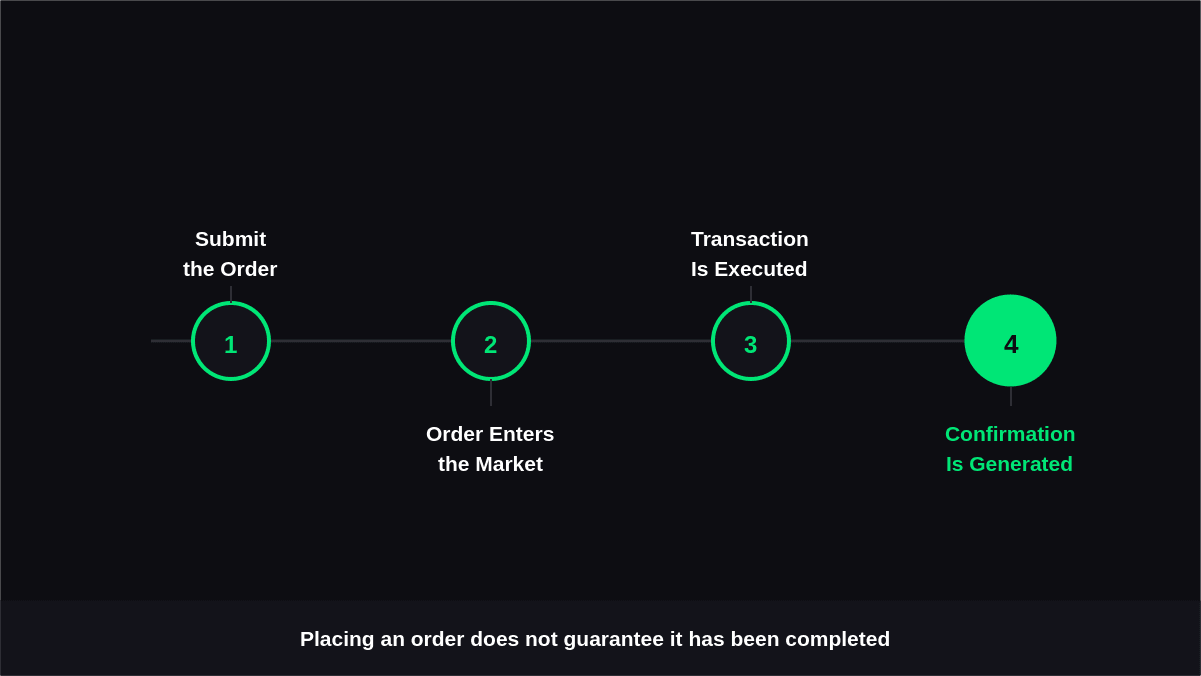
Before receiving a confirmation, an order must first go through trade execution. This is the stage where a buy or sell order is matched and completed according to applicable market conditions.
The process can be understood in four simple steps:
1. Submit the Order
You enter a buy or sell order through your broker, specifying details such as the security, quantity, and order type.
2. Order Enters the Market
Your broker routes the order to the appropriate market or execution venue, where it can be matched with available orders.
3. Transaction Is Executed
Once the order is matched, the transaction is completed. The final execution price can differ from the price you saw when submitting the order, particularly with market orders or during rapid price movements.
4. Confirmation Is Generated
After execution, the broker records the transaction details and provides a confirmation showing information such as the security, quantity, execution price, trade date, and applicable costs.
The key distinction is that placing an order does not guarantee that it has been completed.
The confirmation documents the transaction that was actually executed rather than simply recording your original trading intention.
Why Reviewing the Record Matters
Checking a confirmation is a simple step that can help maintain accurate trading records. A quick review can help you:
- Verify the executed quantity: Confirm that the number of shares, contracts, or units matches the transaction you expected.
- Check the execution price: Make sure the recorded price reflects the completed transaction.
- Review transaction costs: Look for commissions, fees, or other charges that may affect the total cost.
- Spot unexpected details: Identify transactions or adjustments that do not match your trading activity.
- Resolve discrepancies sooner: Contact your broker while the transaction details are still easy to trace.
This becomes particularly important for traders who execute numerous transactions. Small discrepancies can become difficult to investigate when several trades accumulate over time.
A confirmation can also help when comparing actual trading activity with a trading journal, strategy results, or account statements.
Keeping these records aligned gives you a clearer picture of what actually occurred in your account.
Trade Confirmation vs. Trade Settlement
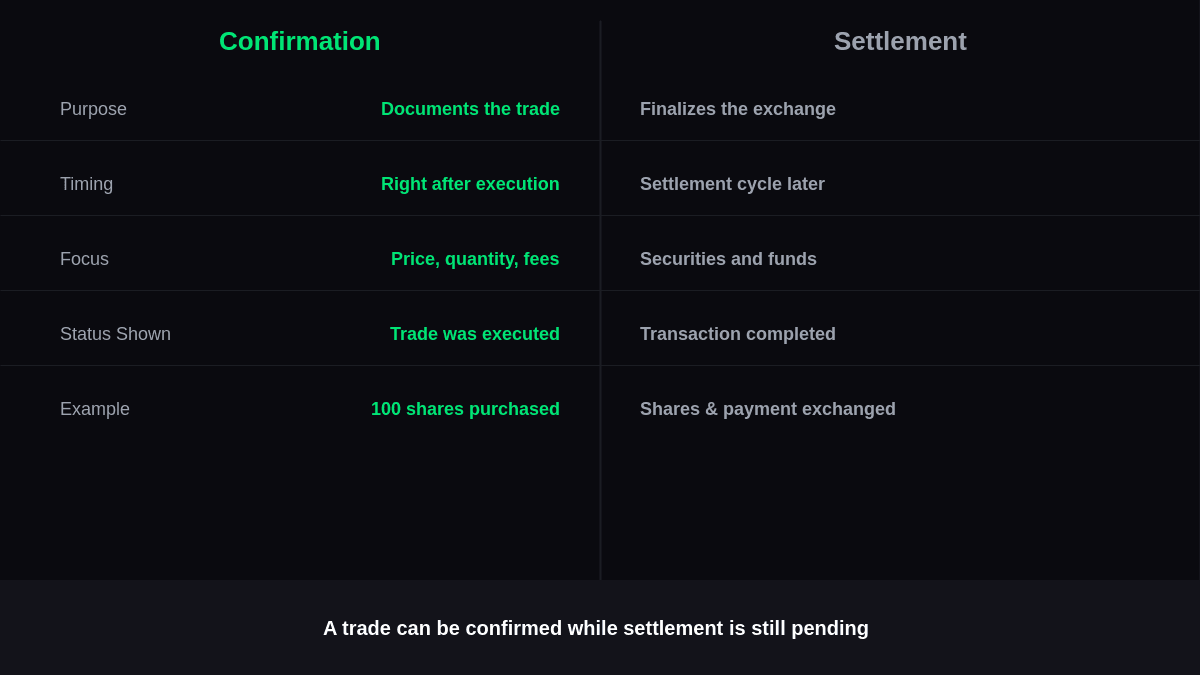
Trade confirmation and trade settlement are connected, but they represent different parts of a transaction. A confirmation records what happened when your order was executed, while settlement covers the process of completing the exchange of cash and securities.
Knowing the difference helps traders interpret their account records correctly.
| Aspect | Trade Confirmation | Trade Settlement |
|---|---|---|
| Purpose | Documents the details of an executed trade | Finalizes the exchange between the buyer and seller |
| Timing | Issued after the transaction is executed | Occurs according to the applicable settlement cycle |
| Focus | Price, quantity, security, fees, and trade date | Transfer of securities and corresponding funds |
| Status | Confirms that the trade was executed | Confirms that the transaction has been completed financially |
| Example | Shows that 100 shares were purchased at a specific price | Shows when the shares and payment are officially exchanged |
A confirmation can therefore show an executed trade even when its settlement date is still in the future. The two records work together to show both what was traded and when the transaction was finalized.
What Should Traders Check on a Confirmation?
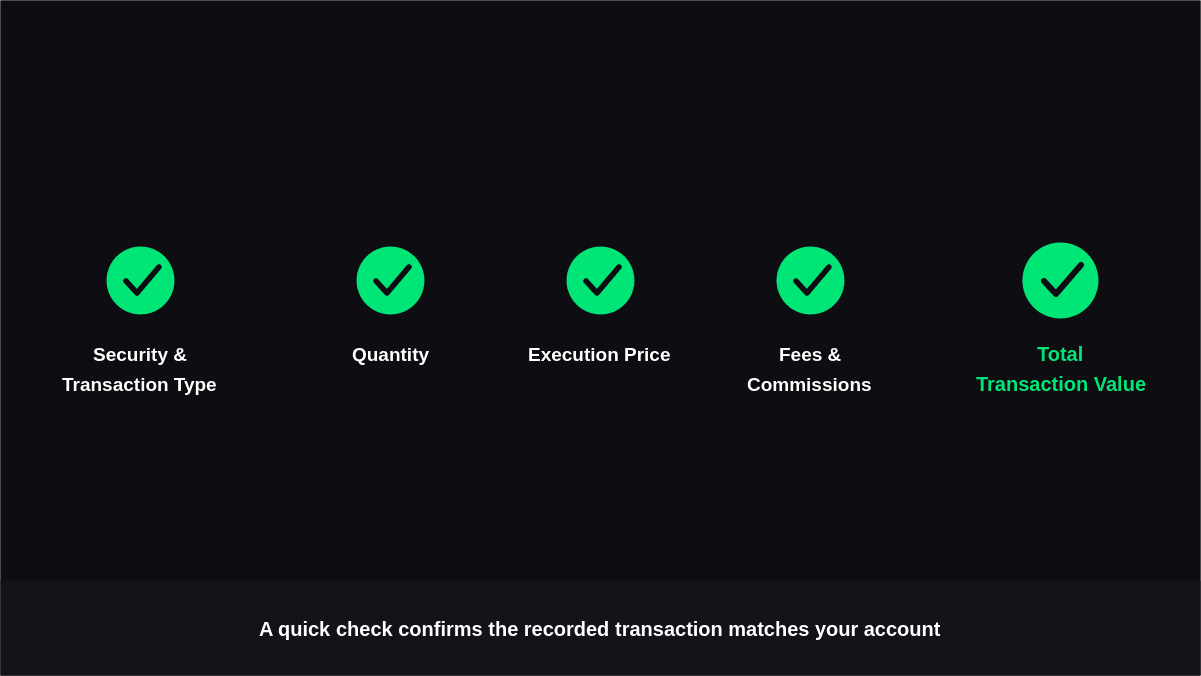
Rather than simply storing the document, traders can review several key fields after an order has been executed. A quick check can help confirm that the recorded transaction matches the activity in your account.
- Security and transaction type: Make sure the correct asset was purchased or sold.
- Quantity: Confirm that the number of shares, contracts, or units matches the completed transaction. If an order was partially filled, the confirmation may show a smaller quantity than the original order.
- Execution price: Compare the recorded price with the actual transaction you expected. Multiple fills may result in different execution prices.
- Fees and commissions: Review any charges applied to the transaction and make sure they are accurately reflected.
- Total transaction value: Check the final amount credited or debited from your account after applicable costs.
Keeping confirmations organized can also make future account reconciliation and tax-related recordkeeping easier.
When Can a Confirmation Help Identify Problems?
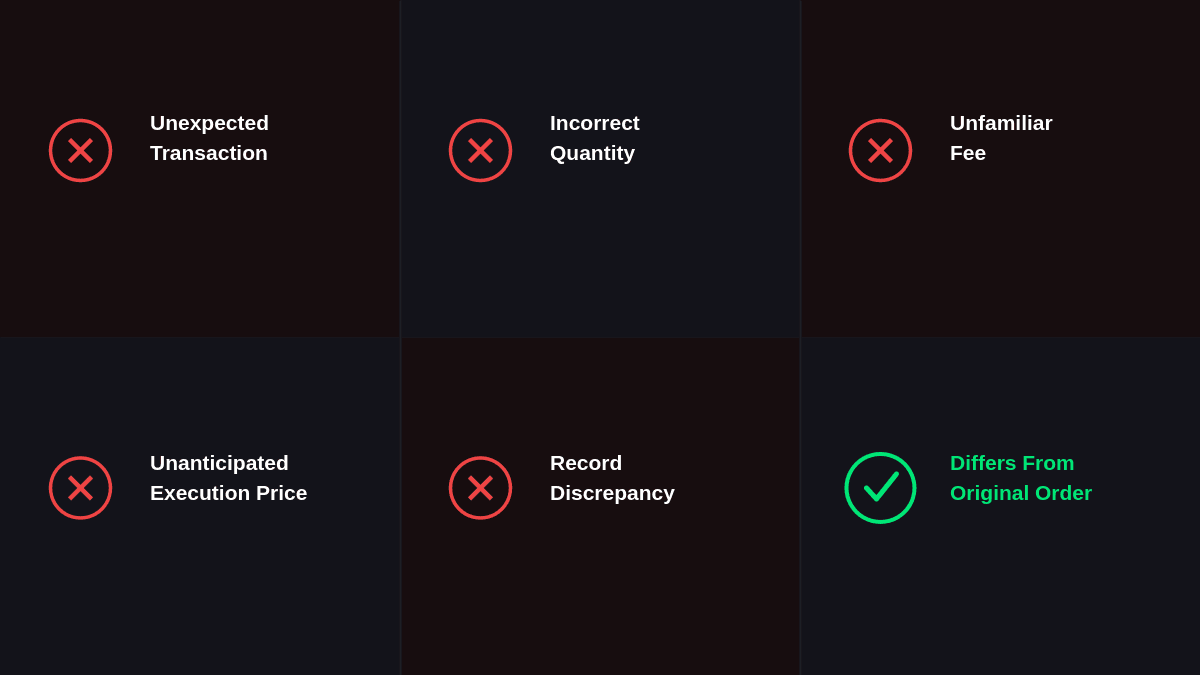
A confirmation is particularly useful when something does not look right in your account.
Potential issues may include:
- An unexpected transaction
- Incorrect quantity
- An unfamiliar fee
- An execution price you did not anticipate
- A discrepancy between your records and the broker's records
- A transaction that appears different from the original order
If you find an inconsistency, compare the confirmation with your order history and account statement. If the difference remains unexplained, contact the broker promptly and keep copies of the relevant records.
The confirmation does not necessarily explain why every execution occurred at a particular price, but it provides a documented starting point for investigating the transaction.
How Confirmations Support Better Trading Records
Consistent recordkeeping can make it easier to understand past trading activity. Confirmations provide transaction-level information that can be used alongside account statements and personal trading journals.
For active traders, these records can help reconstruct when positions were opened or closed and how much was actually paid or received.
This type of detailed trade history can also be useful when learning analyzing backtest results and comparing actual trading activity with historical performance.
For longer-term investors, confirmations can provide documentation that may remain useful well after the original transaction.
The key benefit is clarity. Instead of relying on memory or an incomplete order history, you have a formal record of the completed transaction.
Final Takeaway
Trade confirmation is more than a routine notification. It provides a detailed record of an executed transaction and helps traders verify the asset, quantity, price, costs, and relevant dates associated with the trade.
Taking a few moments to review each confirmation can help catch discrepancies, maintain reliable records, and distinguish execution from trade settlement.
For anyone who trades regularly, tracking these details alongside backtesting metrics can make the post-trade review process more organized and account management considerably easier.