Order blocks are price zones that are analyzed by traders to determine where heavy buying or selling pressure was probably present for a strong market movement. Order block analysis does not analyze every candle but rather the particular zones where the price movement looks like it could have been displaced.
The concept is extensively applied in the price action and smart money trading as it gives an opportunity to analyze where the price will respond once it touches the old zone. It should be noted that the presence of an order block does not mean it is a good entry and reversal point.
Learning how they are formed, how to recognize and confirm such zones is essential for making use of the principle.
What Are Order Blocks in Trading?
Order block refers to a price zone that relates to the last opposite move before a powerful trend formation. Such zones are studied by traders because they may show the potential of highly active price areas.
Key points:
- Bullish: A bearish move followed by strong upward expansion.
- Bearish: A bullish move followed by strong downward expansion.
- Confirmation: Market structure, displacement, and price reaction add context.
- Important: Not every opposing candle qualifies as an order block.
The key is to evaluate the surrounding price action rather than relying on the candle alone.
How to Identify a Potential Order Block
Finding a potential zone requires looking at the price action surrounding it rather than selecting candles in isolation.
Below you can find a complete step by step guide on how to identify a potential order block:
Step 1: Start With a Clear Price Displacement
Observe a clear move out of a relatively defined area. An obvious directional move is the first reason why the price action prior to the move should be studied.
Step 2: Examine the Candle Before the Expansion
It is usual for traders to pay attention to the last opposing candle or the small price range that precedes the powerful movement. It doesn't mean that one should mark all candles that appear before the impulsive movement.
Step 3: Look for a Meaningful Market Structure Change
A more solid formation may be created where the displacement alters the current pattern by creating a higher or lower swing. This provides the trading zone with more context than just having a big candle.
Step 4: Mark the Relevant Price Area
If you have recognized the possible zone, then mark it properly. Do not extend the zone simply for showing future price movements as profitable.
The objective is to create a repeatable method of analysis rather than searching backward for zones that already produced favorable reactions.
Bullish Order Block vs. Bearish Order Block
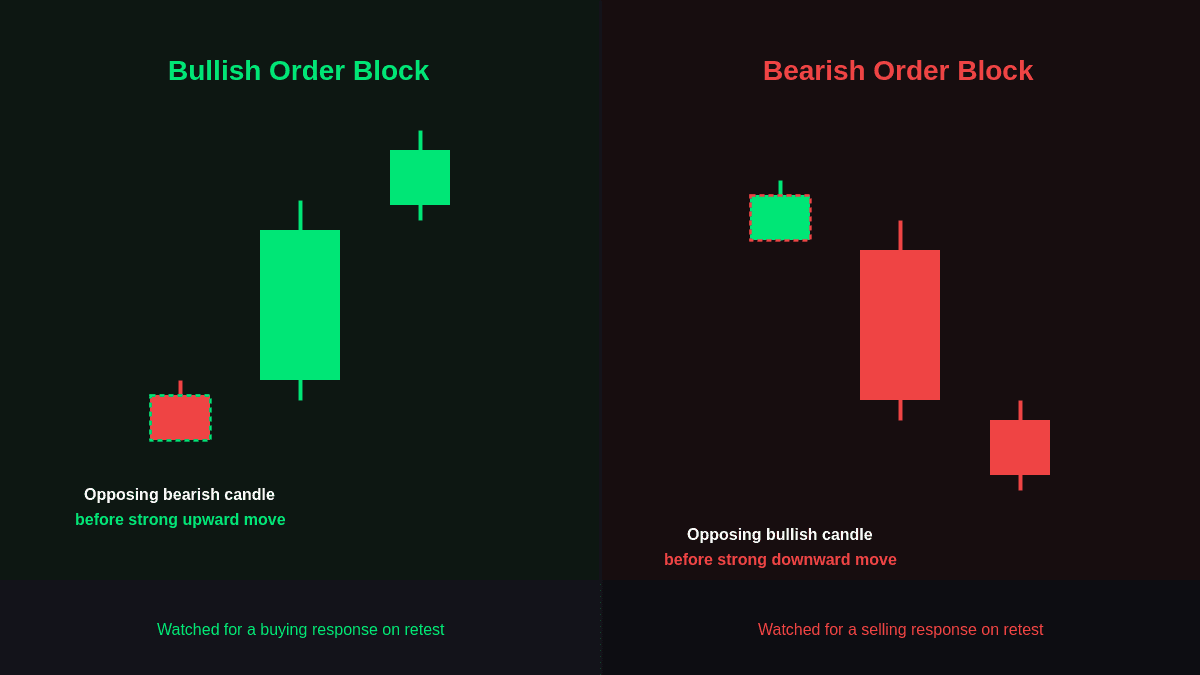
The two primary types differ according to the direction of the significant move that follows the zone. Here you can find a comparison table to understand it better:
| Type | Typical Formation | What Traders Watch For | Potential Role |
|---|---|---|---|
| Bullish order block | An opposing bearish area before strong upward displacement | Buying response when price revisits the zone | Potential support or long setup area |
| Bearish order block | An opposing bullish area before strong downward displacement | Selling response during a later retest | Potential resistance or short setup area |
A bullish order block does not necessarily imply that prices will move higher once revisited. Similarly, a bearish zone does not necessarily imply that the sellers have reclaimed control.
It all depends on the overall market environment. A zone which fits into a bigger trend could be more significant than a zone appearing out of nowhere.
3 Step Guide on How to Trade Order Blocks
To trade an order block, it is not just about labeling a region on the chart. It is important for traders to analyze the bigger picture of the market and wait until prices get back to the region. This will give a better chance for confirmation. Risk management is also an essential step.
Here you will find a proper step by step guide on how to trade order blocks:
1. Identify the Relevant Zone
Look for a well-defined order block that comes before a decisive directional move. Ensure that your zone meets the market structure conditions and is not just any random candle.
2. Wait for Price to Retest
Let the price move back into the marked region rather than moving in directly. Note what happens during the retest, whether there is rejection, consolidation, or a breakout from the region.
3. Confirm Before Entering
Use supporting criteria like market structure, momentum, and liquidity before initiating the trade. Decide the entry, stop loss, and the risk before taking the trade.
How to Validate an Order Block Before Trading
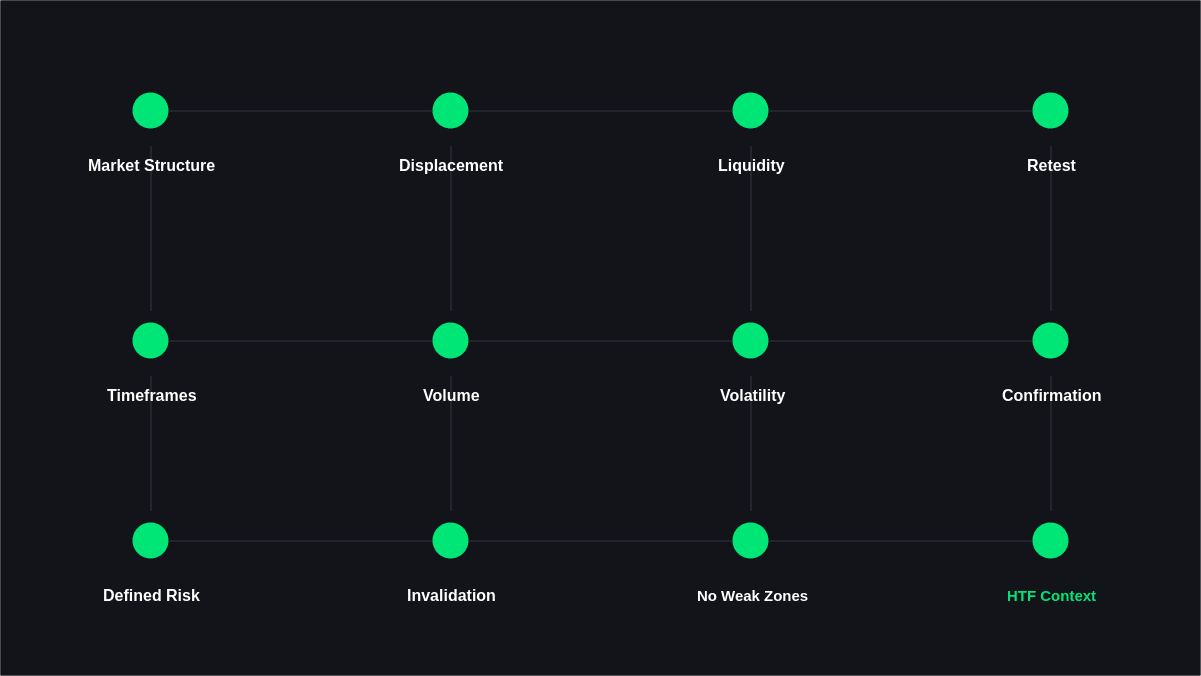
A potential zone identification is just the beginning of the process. Before thinking about trading on the potential zone, traders need to find some evidence in support of it. There are several factors that can help traders make their decision on the matter.
- Check Market Structure
- Measure the Displacement
- Consider Liquidity
- Observe the Retest
- Compare Timeframes
- Check Trading Volume
- Assess Market Volatility
- Look for Confirmation
- Define the Risk
- Set an Invalidation Level
- Avoid Weak or Unclear Zones
- Review the Higher-Timeframe Context
Order Block Trading Strategy in Different Market Conditions
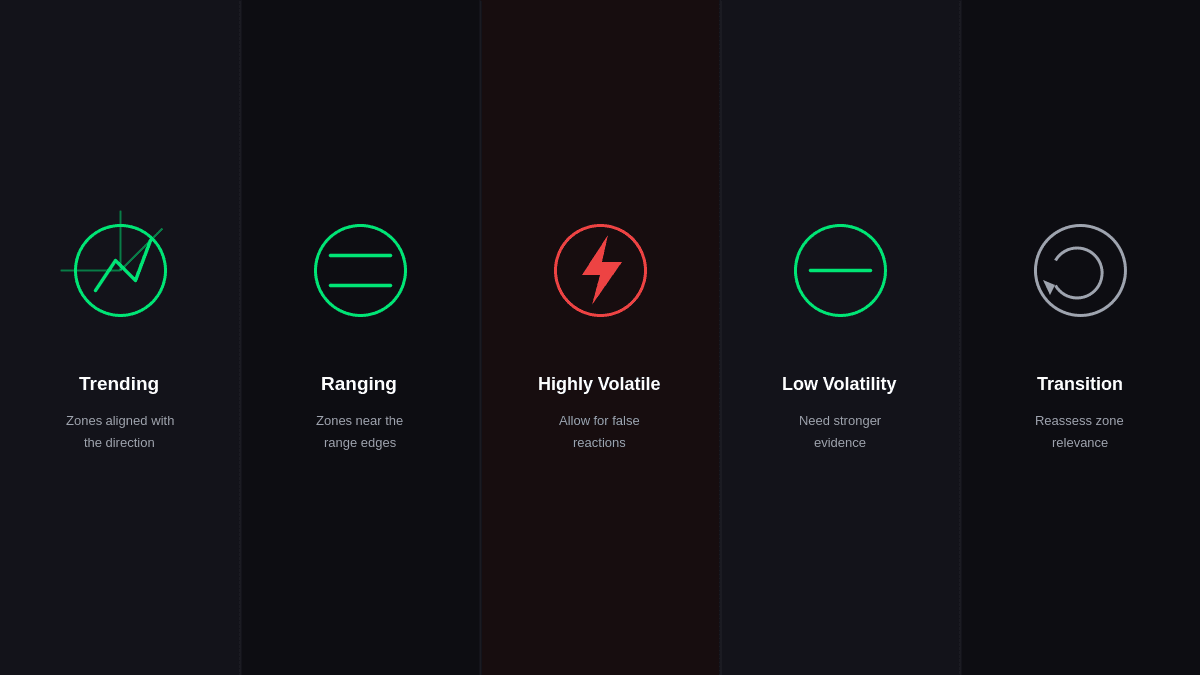
An order block trading strategy can lead to various readings based on the market context. A zone which is effective during an intense trend might be interpreted differently within a range or during high volatility.
Understanding the surrounding conditions can help traders assess the setup more carefully.
| Market Condition | What to Look For | Key Consideration |
|---|---|---|
| Trending Market | Zones that align with the current direction | Favor setups supported by the broader trend |
| Ranging Market | Zones near range highs or lows | Avoid placing too much importance on zones in the middle of the range |
| Highly Volatile Market | Strong displacement and clear confirmation | Allow for false reactions and potential breaks |
| Low-Volatility Market | Limited price movement around the zone | Look for stronger evidence before interpreting a reaction |
| Market Transition | Changes in highs, lows, and momentum | Reassess whether the existing zone remains relevant |
Market environment needs to be taken into account before taking any action based on a particular zone. This ensures that the traders do not give the same interpretation to each and every setup.
Common Mistakes When Reading Order Blocks
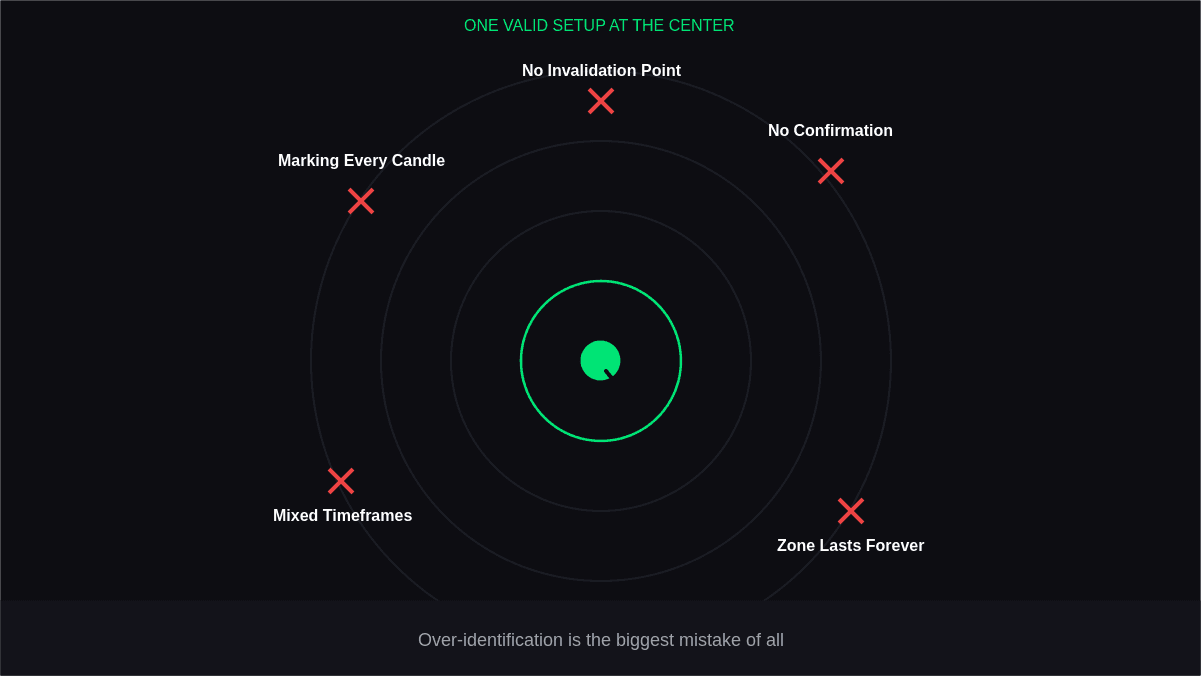
Several mistakes can make order block analysis less consistent:
- Marking every opposing candle as a significant zone.
- Ignoring the market structure surrounding the area.
- Entering immediately whenever price touches the zone.
- Treating previous reactions as proof that the next reaction will be similar.
- Mixing signals from unrelated timeframes without a clear analytical framework.
- Assuming a zone remains valid indefinitely.
- Using an order block as the only reason for taking a trade.
- Failing to define the point at which the setup is no longer valid.
The biggest issue is often over-identification. If a trader marks dozens of zones on every chart, the concept can lose its usefulness because almost any future movement can appear to interact with one.
Are Order Blocks Reliable Trading Signals?
Yes. Order blocks are more appropriately treated as interest zones that fit into a larger context of price action trading strategy rather than independent setups.
The viability of using them is influenced by a number of parameters including market structure, displacement, volatility, timeframe, liquidity, and what happens when the price moves back to the zone. A visually clean historical example does not establish that the same setup will perform consistently in future conditions.
A trader using this approach can gain by setting up some objective criteria. For instance, traders can define the conditions for a displacement to be considered significant, criteria for marking a zone, what should confirm the setup, and under what conditions the setup should be invalidated.
Conclusion
Order blocks can help traders build a framework to study price regions related to major moves in the market. The usefulness of order blocks cannot be defined by just looking for a specific candle; it should be defined in terms of displacement, structure, liquidity, and price action in that region.
The better way would be to regard each zone as a hypothesis, not a prediction, develop objective criteria for identifying the region, wait for confirmations, and formulate specific invalidation criteria before opening any trade.
In the end, the objective of the trader is not to find an order block in every price chart but to find whether a certain zone deserves further examination or not, without forgetting that there is no price-action concept free of trading risks.