Markets do not move at the same pace every day. A relatively calm session can suddenly turn into a period of sharp price swings, wider ranges, and faster reversals.
These changes can significantly affect position management, because a trade that seems appropriately sized in a quiet market may carry much greater exposure when volatility expands.
Traders therefore need to consider not only the direction of a trade but also how much price movement the position can reasonably withstand, with tools
such as the ATR indicator for stop loss helping account for changing volatility.
In this blog you will explore how volatility changes the position management.
What is Volatility?
Volatility measures how much and how quickly an asset’s price moves over a given period. Higher volatility means larger and faster price swings, while lower volatility reflects smaller, steadier movements.
For traders, understanding volatility is important because changing price ranges can directly affect trade risk and Position Management.
Why Volatility Matters After a Trade Is Open
Volatility measures how widely and quickly an asset's price tends to move. When volatility increases, it can become harder to distinguish normal fluctuations from meaningful price changes.
This matters because managing an existing position involves:
- Exposure: How much capital is currently at risk.
- Exits: Whether profit targets or exit conditions still make sense.
- Stop placement: Whether the stop allows for normal market movement.
- Trade validity: Whether the original trade idea remains intact.
Instead of reacting to every price swing, traders can assess whether the market's current behavior still fits the assumptions behind the trade.
How Market Conditions Alter Position Size
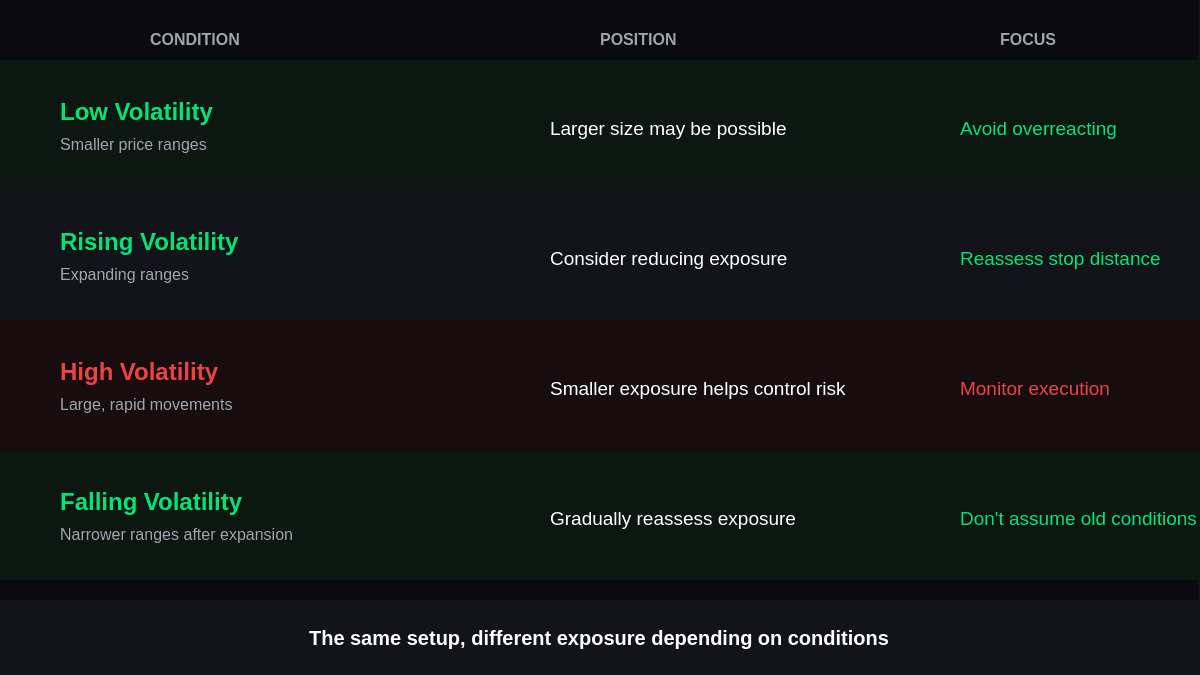
Position Sizing is closely connected to volatility. If an asset is moving through larger daily ranges, the same number of shares or contracts can create substantially more dollar risk than it would during a quieter period.
For example, suppose a trader normally accepts a $500 maximum loss on a trade. If the market becomes more volatile and the required stop distance increases, maintaining the same position size could push the potential loss well beyond that limit.
A volatility-adjusted approach may therefore involve reducing the number of units while keeping the intended risk relatively consistent.
| Market Condition | Typical Price Behavior | Position Consideration | Management Focus |
|---|---|---|---|
| Low volatility | Smaller price ranges | Larger size may be possible within the same risk limit | Avoid overreacting to minor moves |
| Rising volatility | Expanding ranges and faster swings | Consider reducing exposure | Reassess stop distance |
| High volatility | Large and rapid price movements | Smaller exposure may help control risk | Monitor execution and invalidation |
| Falling volatility | Narrower ranges after expansion | Gradually reassess exposure | Avoid assuming the previous conditions remain |
Stop Placement Needs More Context in Fast Markets
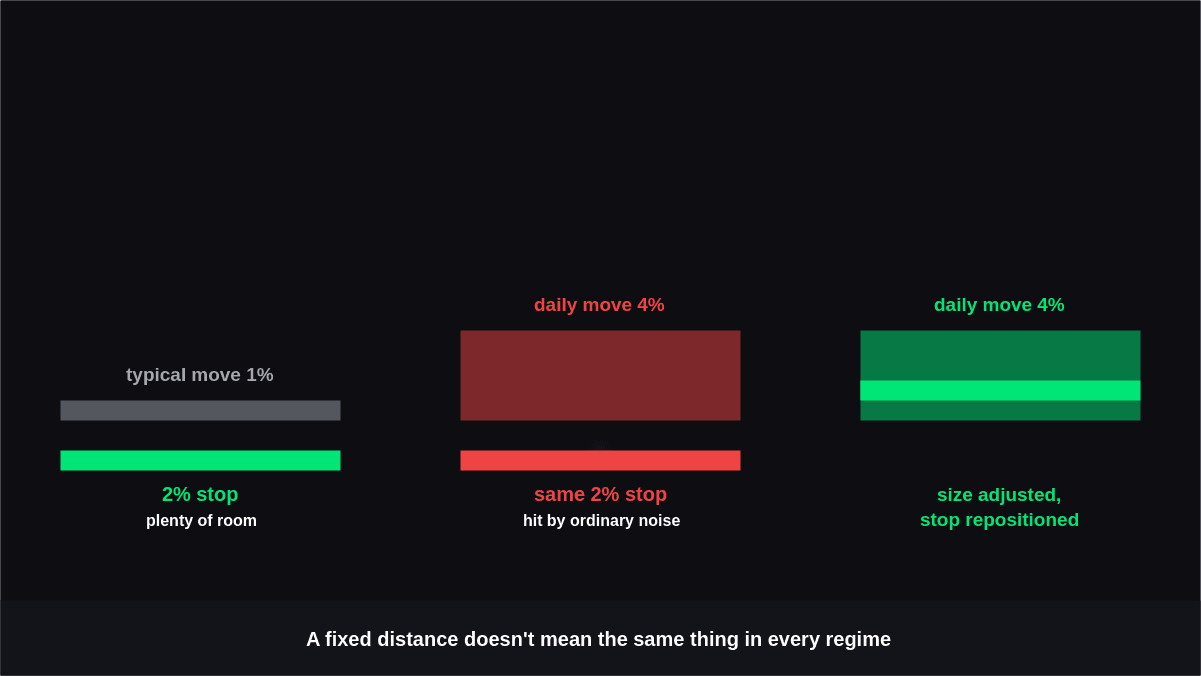
A fixed stop distance does not necessarily have the same meaning across different volatility environments.
Consider a stock that normally moves 1% during a typical session. A 2% stop might provide substantial room for normal fluctuations. If daily movement expands to 4%, however, that same stop could be reached by an ordinary intraday swing rather than a meaningful deterioration in the trade setup.
This does not mean stops should simply be moved farther away. A wider stop can increase potential loss if position size remains unchanged.
Instead, traders can consider the relationship between volatility, technical structure, position size, and acceptable risk.
The goal is to distinguish normal market noise from a price move that genuinely challenges the trade thesis.
When Volatility Calls for Active Trade Adjustments
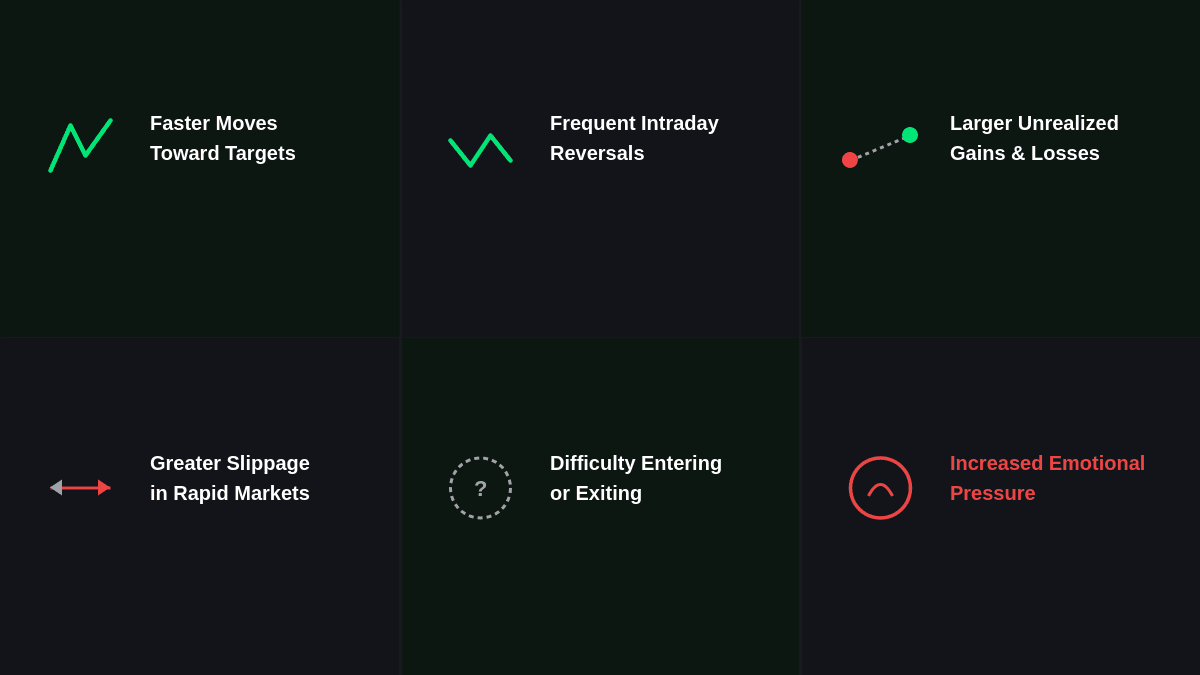
Higher volatility can change how a position behaves even when the underlying analysis has not changed.
Traders may encounter:
- Faster moves toward profit targets
- More frequent intraday reversals
- Larger unrealized gains and losses
- Greater slippage during rapid markets
- More difficulty entering or exiting at expected prices
- Increased emotional pressure when exposure is too large
These conditions can make active management more important. Depending on the strategy, a trader might reduce exposure, scale out, reassess an exit level, or simply leave the position unchanged if the original plan still accounts for the market's current range.
The key is to make adjustments based on predefined rules rather than reacting emotionally to large candles.
Using Volatility to Reassess Risk Exposure
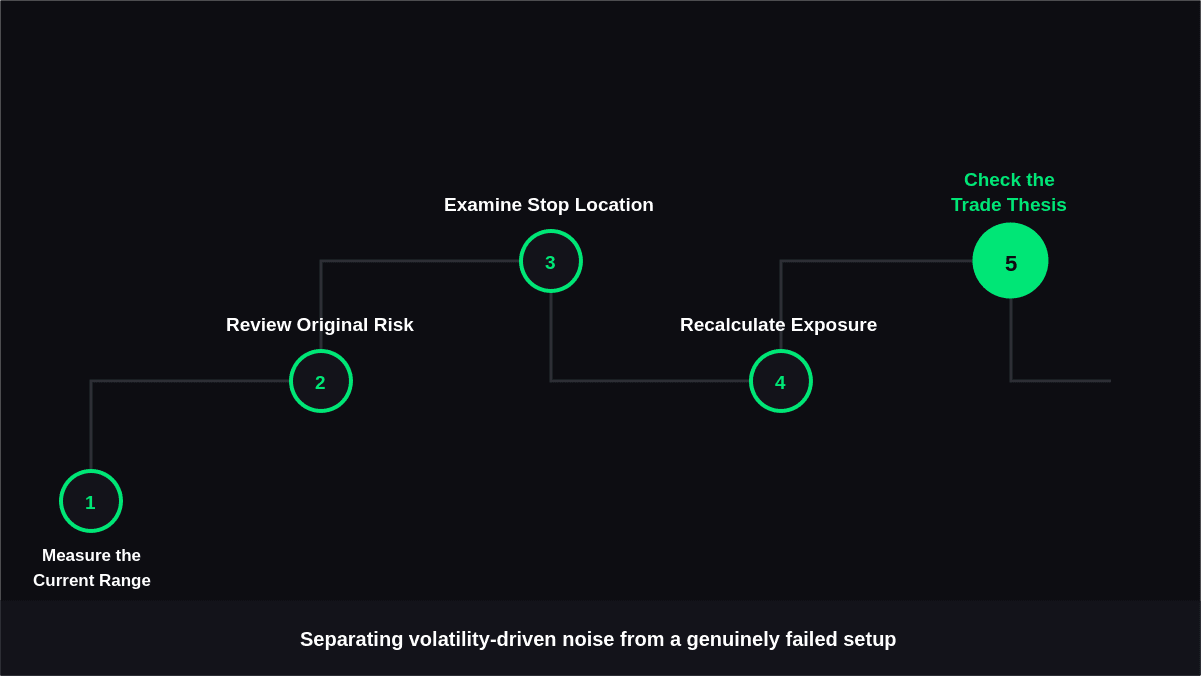
Risk Management becomes especially important when volatility changes quickly. A position should be evaluated according to the amount of capital exposed, the distance to its invalidation point, and the potential consequences of an unexpected move.
One useful process is to review the trade whenever volatility shifts materially:
1: Measure the current range: Compare recent price movement with the conditions present when the position was opened.
2: Review the original risk: Check whether the potential loss still fits the trading plan.
3: Examine the stop location: Determine whether the stop remains logically positioned relative to market structure.
4: Recalculate exposure: If the position is now too large for current conditions, consider whether reducing size is appropriate.
5: Check the trade thesis: Separate volatility-driven price noise from evidence that the original setup has failed.
This process helps prevent volatility itself from becoming a reason for impulsive decisions.
Volatility Can Change the Trade's Reward Profile
Volatility does not only affect downside exposure. It can also change how quickly a trade reaches a target and how realistic a particular reward expectation is.
A highly volatile market may reach a projected target quickly, but it may also travel through the target area and reverse sharply.
Conversely, a low-volatility environment may require considerably more time for a position to develop.
This means traders can review whether their expected holding period, target distance, and entry exit signals still make sense under current conditions.
The objective is not to predict every price movement but to recognize when the market environment has materially changed.
Practical Rules for Managing Volatile Positions
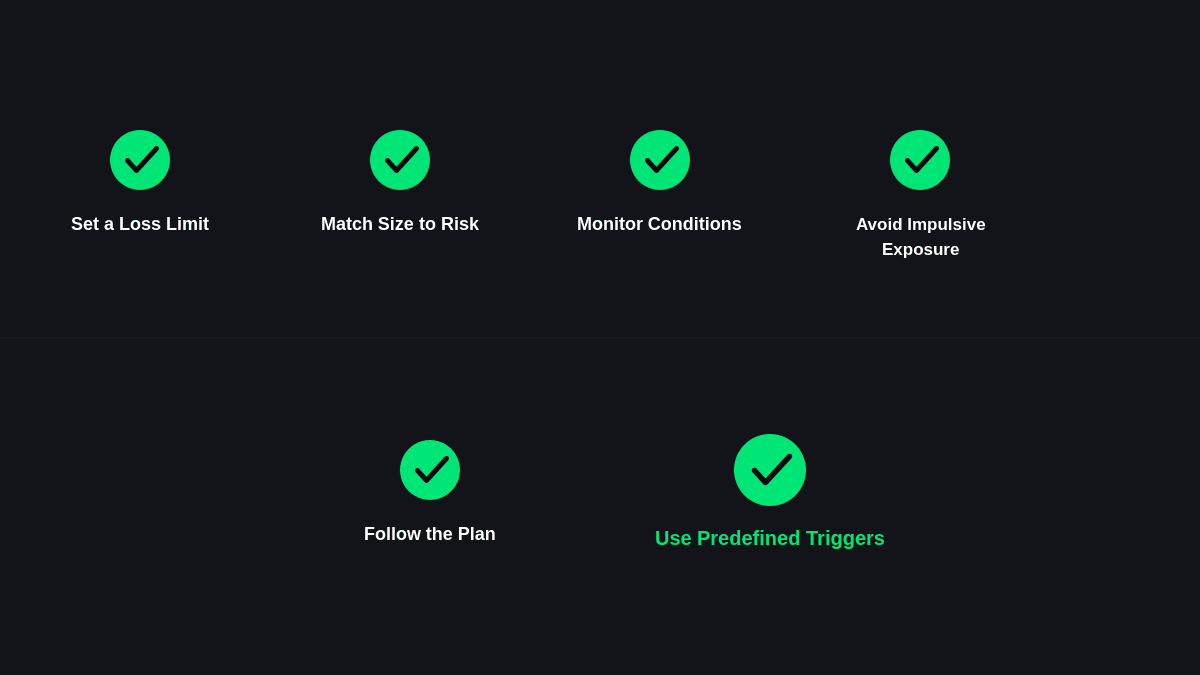
A consistent framework can make decisions easier when price action becomes unusually fast. Traders can focus on a few practical rules:
- Set a loss limit: Define the maximum acceptable loss before entering.
- Match size to risk: Adjust position size according to the intended stop distance.
- Monitor conditions: Check whether current volatility still matches the original trade assumptions.
- Avoid impulsive exposure: Do not increase a position simply because prices are moving quickly.
- Follow the plan: Do not exit solely because of a large candle when the trade remains valid.
- Use predefined triggers: Make adjustments when specific conditions in the trading plan are met.
This approach helps keep Volatility Trading based on planned decisions rather than emotional reactions.
Conclusion
Position Management becomes more demanding when volatility expands because price can travel farther and faster before a trader has time to respond. Changes in range can affect position size, stop placement, exposure, execution, and the expected path toward a target.
The practical response is not to predict when volatility will rise or fall. Instead, traders can build flexibility into their plans by connecting exposure to current market conditions and reviewing risk whenever those conditions change.
A Position Sizing Calculator can also help traders adjust exposure systematically rather than relying on intuition. With clear rules for sizing, exits, and trade adjustments, volatility can be treated as a variable in the trading process rather than a reason for impulsive decisions.