A trade moving in the wrong direction does not automatically mean the original idea was bad. Markets can move against a position because of normal volatility, unexpected news, poor timing, or flawed analysis. Knowing how to handle a trade that moves against you is therefore an important part of developing strong trading psychology and becoming a disciplined trader.
Instead of reacting emotionally, traders need a process for evaluating the position, controlling potential losses, and deciding whether the trade still deserves to remain open.
Why a Losing Position Requires a Fresh Assessment
Once a trade moves against you, the original entry price can become psychologically important. Traders may hold simply because they want the market to return to that level.
A better approach is to reassess the position using current market information. Ask whether the reason for entering the trade still exists and whether the price action has invalidated the original setup.
Three questions can help:
- Is the original trading thesis still valid?
- Has the market structure changed?
- Would you still enter this trade at the current price?
If the answer to the final question is no, the position may deserve another look.
How to Handle a Trade That Moves Against You
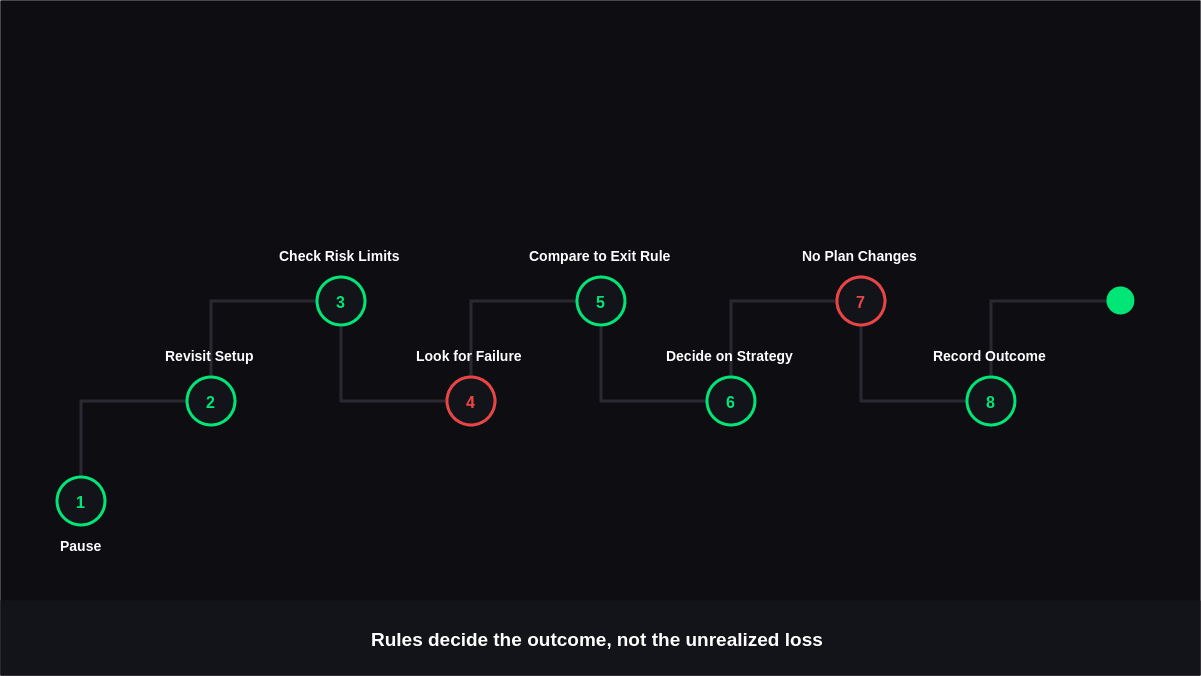
When a trade starts moving against you, the priority is not to react immediately. Follow a structured process to determine whether the position is experiencing normal volatility or whether the original setup has genuinely failed.
Step 1: Pause Before Making a Decision
Avoid closing, adding to, or modifying the position immediately just because the price has moved against you. Short-term fluctuations are common, and an emotional reaction can lead to an unnecessary decision.
Take a moment to review the trade objectively rather than focusing only on the current unrealized loss.
Step 2: Revisit the Original Trade Setup
Go back to the conditions that justified the entry. Review the technical levels, pattern, trend, or other factors that supported the trade.
Ask yourself:
- What was the original reason for entering?
- What conditions were expected to support the trade?
- Are those conditions still present?
This helps determine whether the position is still based on a valid trading idea.
Step 3: Check Whether the Trade Is Still Within Its Risk Limits
Compare the current position with the risk parameters you established before entering. Check the planned stop level, position size, and maximum acceptable loss.
If the trade remains within the predetermined risk parameters, there may be no reason to make an immediate change solely because the position is temporarily negative.
Step 4: Look for Signs That the Setup Has Failed
A losing position becomes more concerning when the market invalidates the conditions behind the trade.
For example, this could happen when:
- A key support or resistance level breaks.
- The expected price pattern fails.
- The broader market structure changes.
- New information directly contradicts the original thesis.
These developments provide a stronger reason to reconsider the position than the size of the unrealized loss alone.
Step 5: Compare the Current Market With Your Exit Rule
Once you know whether the setup remains valid, compare the current price with the exit conditions defined in your trading plan.
If the market has reached the level where the trade was supposed to be closed, follow that rule. Do not keep the position open simply because you hope the price will eventually return to your entry.
Step 6: Decide Whether the Position Still Fits the Strategy
At this point, make the decision based on your trading rules rather than your emotions.
If the setup remains valid and the position is within its planned risk limits, continuing to hold may be consistent with the strategy. If the setup has been invalidated or the risk limit has been reached, exiting may be the appropriate response.
The question is not, “Will the market come back?” Instead, ask, “Does this trade still meet the conditions under which I entered?”
Step 7: Avoid Changing the Plan Just to Avoid a Loss
One of the most common mistakes is changing the original plan after the trade starts losing. This can include moving the stop farther away, increasing the position size without a predefined rule, or holding indefinitely in the hope of reaching breakeven.
If an adjustment was not part of the strategy, recognize that it changes the original risk calculation.
Step 8: Record What Happened After the Trade
Once the position is closed, document the outcome. Record the original setup, what caused the trade to move against you, whether the exit rules were followed, and whether you made any emotional decisions.
This creates a useful record for identifying recurring mistakes and improving future trade management.
Use Risk Limits Before Emotions Take Over
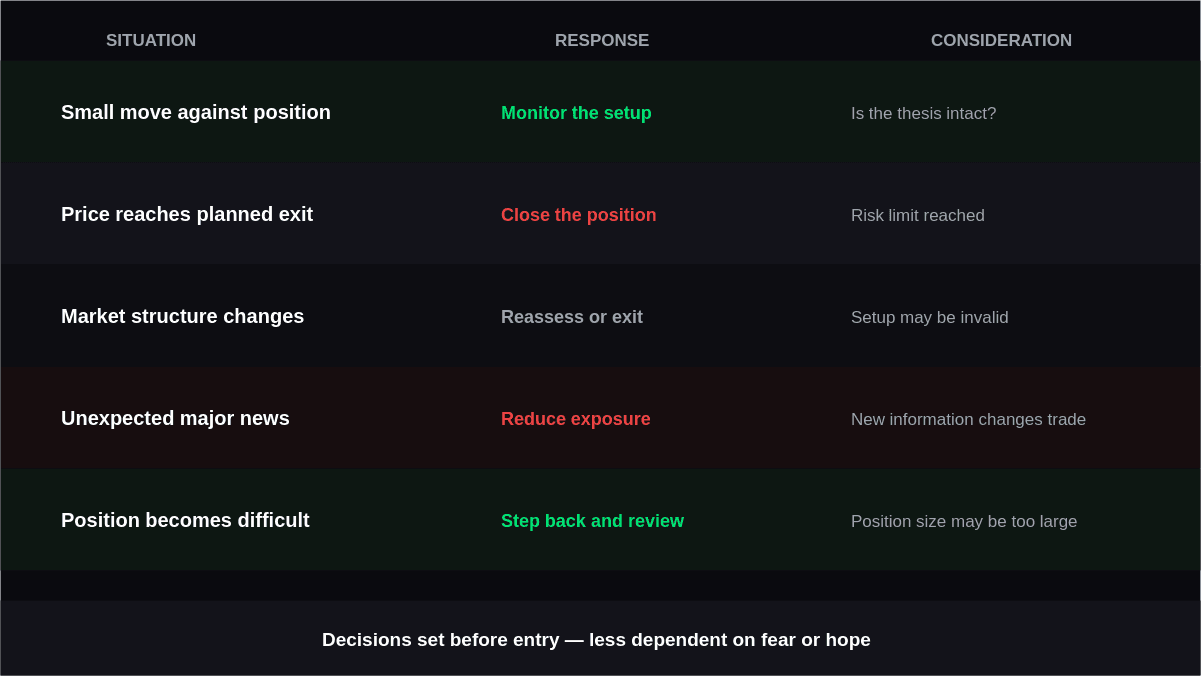
Effective trading risk management begins before the position is opened. A trader should already know how much capital can be lost if the setup fails.
| Situation | Possible Response | Main Consideration |
|---|---|---|
| Small move against the position | Monitor the original setup | Is the trade thesis intact? |
| Price reaches the planned exit | Close the position | Risk limit has been reached |
| Market structure changes | Reassess or exit | Original setup may be invalid |
| Unexpected major news | Reduce exposure needed | New information change trade |
| Position becomes difficult | Step back and review | Position size may be too large |
Having predefined limits makes decisions less dependent on fear, hope, or frustration.
Know When a Stop Loss Should Be Triggered
A stop loss in trading is designed to limit damage when a trade moves beyond an acceptable level. Its location should be based on the trade's structure or risk plan rather than an arbitrary dollar amount.
For example, a trader buying after a breakout may place the stop below the level that should hold if the breakout is genuine. If price falls through that level, the original premise may no longer be valid.
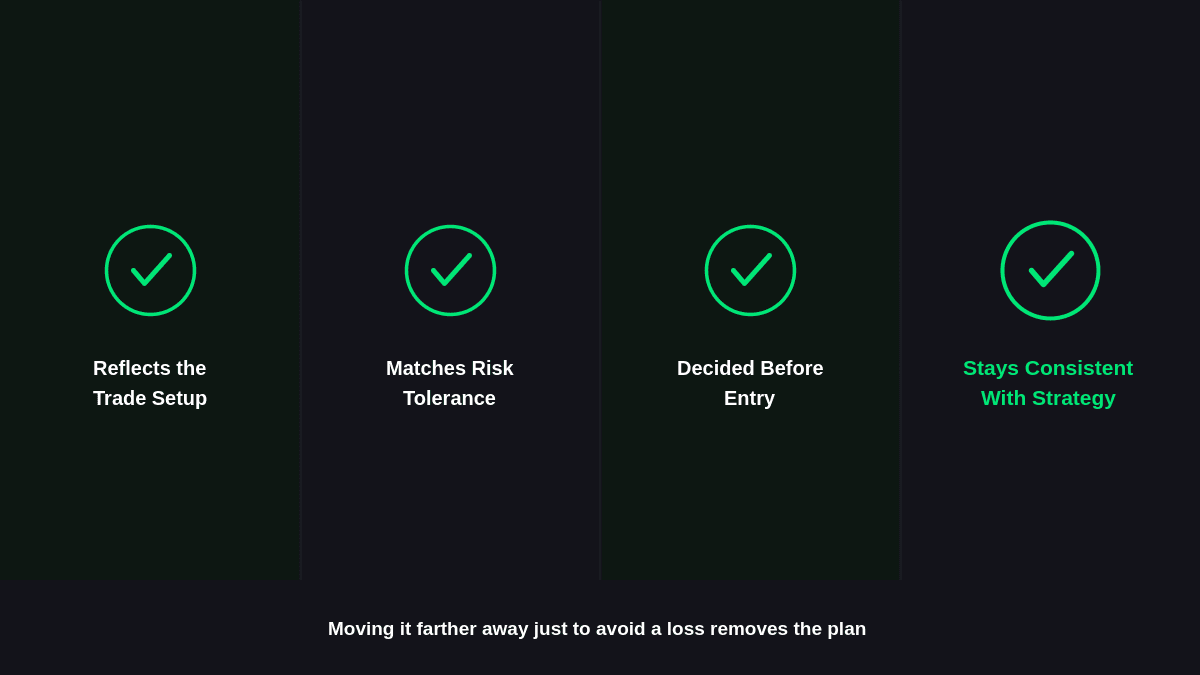
A well-planned stop loss should:
- Reflect the trade setup: Place it where the original idea would be considered invalid.
- Match your risk tolerance: Make sure the potential loss fits within your predetermined risk limit.
- Be decided before entry: Establish the exit level before emotions influence the decision.
- Remain consistent with the strategy: Avoid changing the level simply because the position starts losing.
Moving the stop farther away just to avoid taking a loss changes the trade's original risk profile. A planned exit can quickly become an open-ended position with no clearly defined downside.
Avoid Averaging Down Without a Clear Rule
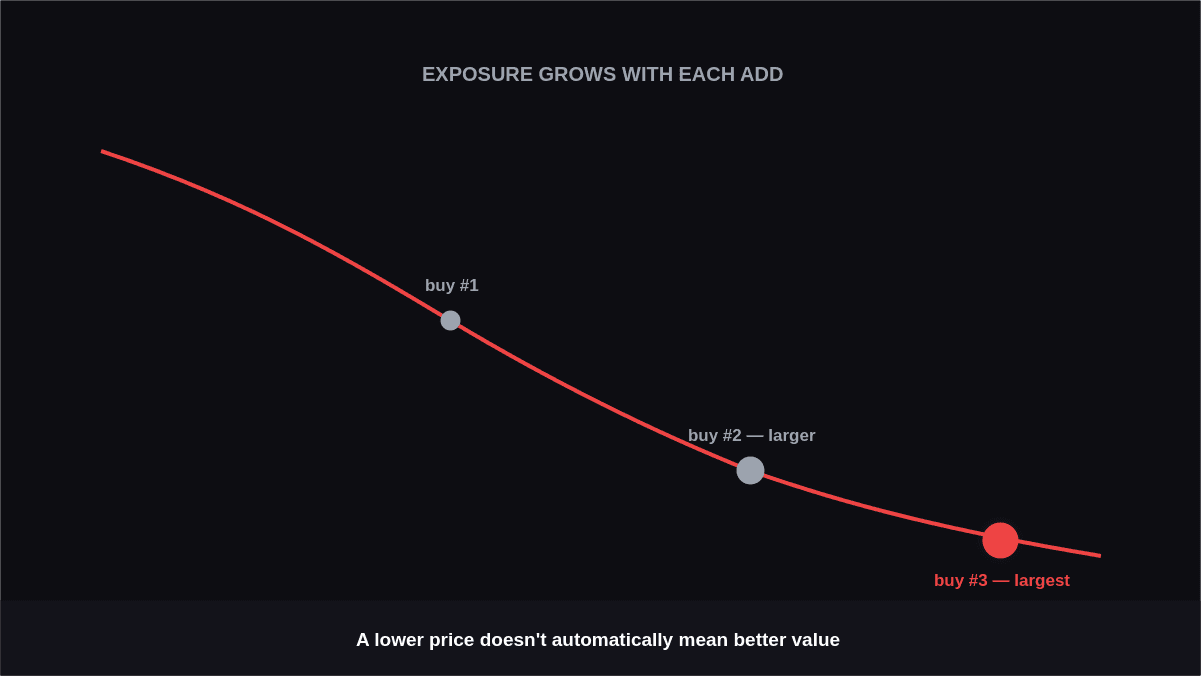
Adding to a losing position can sometimes be part of a deliberately tested strategy, but doing it impulsively creates a different problem.
A trader may buy more after a decline because the asset now appears cheaper. Yet a lower price does not automatically mean better value or a higher probability of recovery.
Before adding to a position, consider:
- Was adding part of the original strategy?
- Does the new position still fit the maximum risk limit?
- Has the reason for the original trade changed?
- Is the decision based on analysis or the desire to recover the loss?
If there is no predefined reason for increasing exposure, staying out may be more disciplined than adding risk.
Separate a Bad Trade From a Bad Outcome
Not every losing trade was a mistake. A well-planned position can lose money even when the analysis, entry, position size, and exit rules were reasonable.
Likewise, a profitable trade can still result from poor decision-making if the trader ignored risk limits and simply benefited from favorable market movement.
This distinction matters because reviewing losing trades should focus on the quality of the decision-making process, not just the final profit or loss.
After closing a trade, record what happened, why the position was entered, what changed, and whether the rules were followed.
What to Do After Closing the Position
Closing a losing trade does not require immediately finding another opportunity. A short pause can prevent one poor outcome from turning into several impulsive decisions.
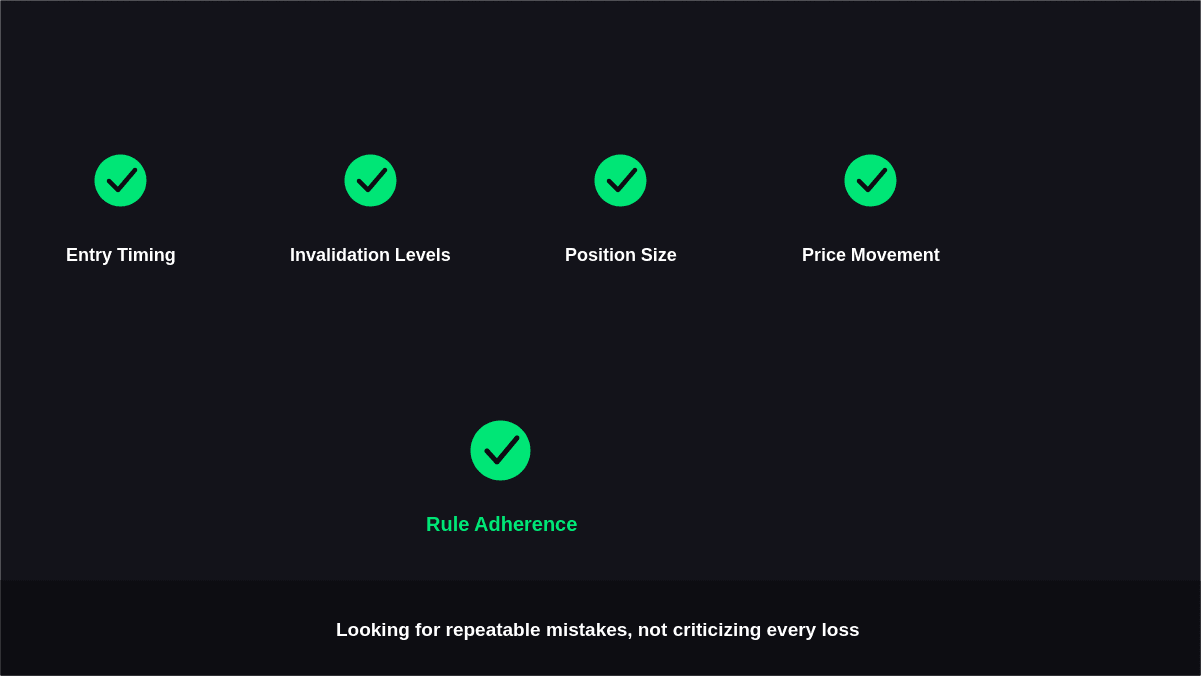
After closing the position, review the trade while the details are still fresh. Pay attention to:
- Entry timing: Did you enter before the setup was fully confirmed?
- Invalidation levels: Did you ignore a level that indicated the trade idea had failed?
- Position size: Was the position larger than your risk plan allowed?
- Price movement: Did short-term volatility influence your decision?
- Rule adherence: Did you follow the trading plan from entry to exit?
The purpose of a post-trade review is not to criticize every losing decision. Instead, look for repeatable mistakes that can be corrected in future trades.
Conclusion
Learning how to handle a trade that moves against you is less about predicting a reversal and more about controlling the decisions that follow an unfavorable price move. Reassessing the original thesis, respecting predefined risk limits, and accepting valid exits can help traders protect their capital and maintain consistency.
A disciplined trader does not need every position to succeed; they need a process that helps them validate trading strategies and keeps individual losses from becoming larger problems.