Trading Halts can interrupt normal market activity while a trader already has an open position. When trading stops, traders may temporarily lose the ability to act on entry exit signals or exit the affected security, even though their position remains exposed to market developments.
The impact depends on why the halt occurred, how long it lasts, and what happens when trading resumes.
Understanding these mechanics can help traders interpret their account status and prepare for the possibility of a significant price change after the halt ends.
What Is a Trading Halt?
A trading halt is a temporary suspension of trading in a security or, in some circumstances, across a broader market.
A halt may occur for several reasons, including:
- Material company announcements
- Significant order imbalances
- Regulatory concerns
- Technical problems
- Extreme price movements
- Pending news that could materially affect the security
A halt does not necessarily mean that the underlying company is in financial trouble. The reason and type of suspension matter when assessing what happens next.
What Happens to an Open Position During a Halt?
An open position generally remains open while trading is suspended. The halt does not automatically close the trader's position simply because transactions cannot currently take place.
However, the position can become difficult to manage because normal execution is temporarily unavailable.
For example, a trader holding 100 shares cannot necessarily sell those shares during the suspension. Similarly, a trader with a short position may be unable to buy shares to close it until trading resumes.
This creates a temporary gap between holding a position and being able to act on it.
How Trading Halts Affect Different Position Types
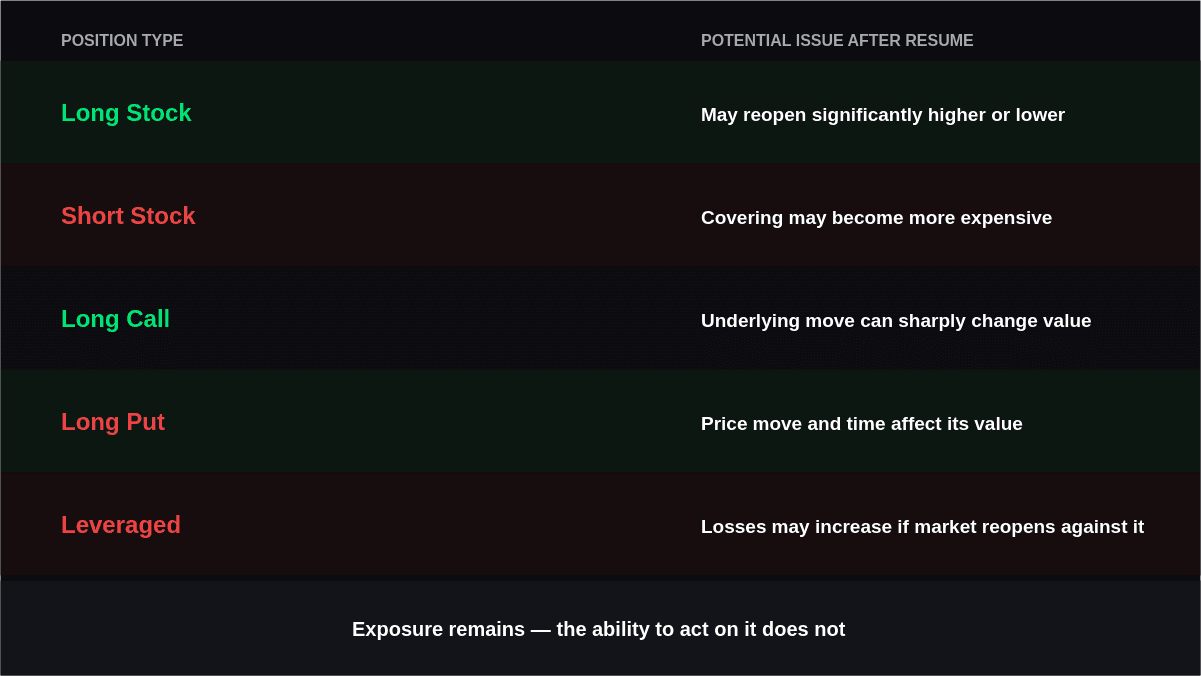
The practical effect can vary depending on whether a trader is long, short, or holding a derivative position.
| Position Type | During the Halt | Potential Issue After Trading Resumes |
|---|---|---|
| Long stock position | Shares generally remain in the account | Price may reopen significantly higher or lower |
| Short stock position | Short position generally remains open | Covering may become more expensive if price rises |
| Long call option | Contract remains subject to its terms | Underlying price movement can sharply change option value |
| Long put option | Contract remains active under its terms | Price movement and time can affect its value |
| Leveraged position | Exposure remains while execution is restricted | Losses may increase if the market reopens against the position |
A trading halt does not necessarily close an existing position. Your position can remain open even though you cannot buy or sell the security until trading resumes.
Why the Reopening Price Matters
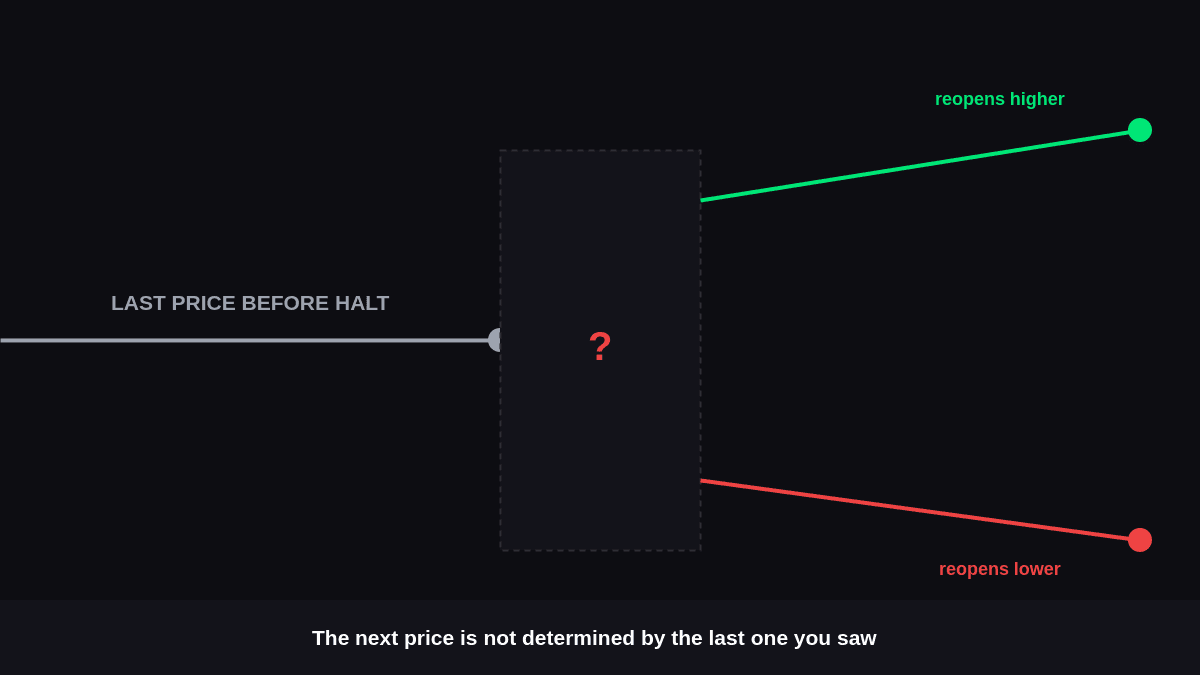
When trading resumes, the security may not return at the same price at which it was halted.
New information can change how buyers and sellers value the security while trading is suspended. As a result, the next available market price can be substantially different from the last traded price before the halt.
This can create a gap.
For a long position, a downward reopening can produce an immediate unrealized loss. For a short position, an upward reopening can create significant additional exposure.
The size and direction of the move cannot be determined simply from the fact that a halt occurred.
Can You Place Orders During a Trading Halt?
Whether a broker allows orders to be entered during a halt depends on the broker, security, order type, and market involved. Some platforms may allow traders to submit orders that remain pending until trading resumes. Other orders may be restricted, rejected, canceled, or subject to special handling.
This is why traders should understand their broker's order policies rather than assuming that placing an order during a suspension guarantees execution. Most importantly, an order submitted before a halt does not automatically mean it will execute at the price the trader expected, even when signals and overlays indicate a potential trade before the interruption.
Trading Halt Rules Can Vary by Market
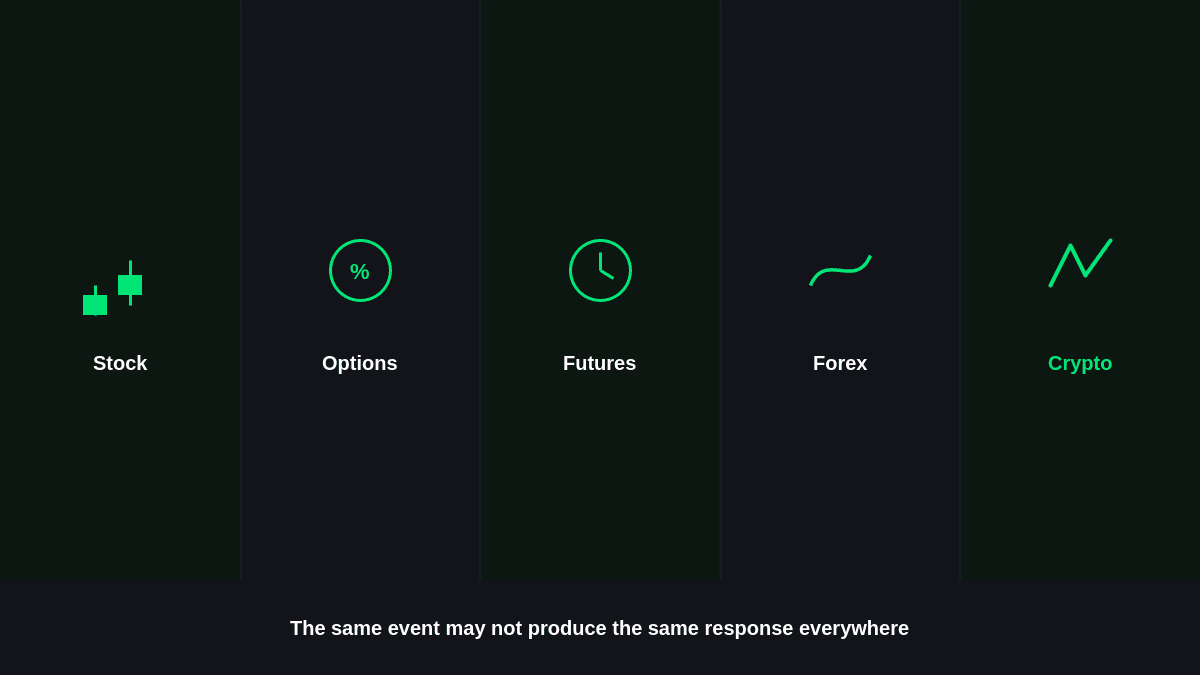
Trading halt rules can differ depending on the market, exchange, and security being traded. A stock market may use different procedures from futures, options, or other markets when deciding why trading stops and how it resumes.
| Market | How Halt Rules May Differ | What It Means for Traders |
|---|---|---|
| Stock Market | Trading may pause because of significant company news, unusual price activity, or order imbalances. | Open positions may remain in place while trading is temporarily unavailable. |
| Options Market | A halt in the underlying security can affect options trading and pricing. | Traders may have limited ability to adjust or close option positions. |
| Futures Market | Exchanges can use specific price limits or temporary trading pauses. | Positions may remain exposed while the contract is restricted from trading. |
| Forex Market | Trading is generally continuous during market hours, but individual instruments or platforms can have interruptions. | Execution can depend on the broker and liquidity provider. |
| Crypto Market | Rules can vary significantly between exchanges and individual trading platforms. | A platform may suspend trading even when the broader crypto market remains active. |
These differences matter because the same type of market event may not produce the same trading response everywhere. Before relying on an order or exit plan, traders should understand the trading halt rules that apply to the specific market and security they hold.
What Are the Main Trading Halt Risks?
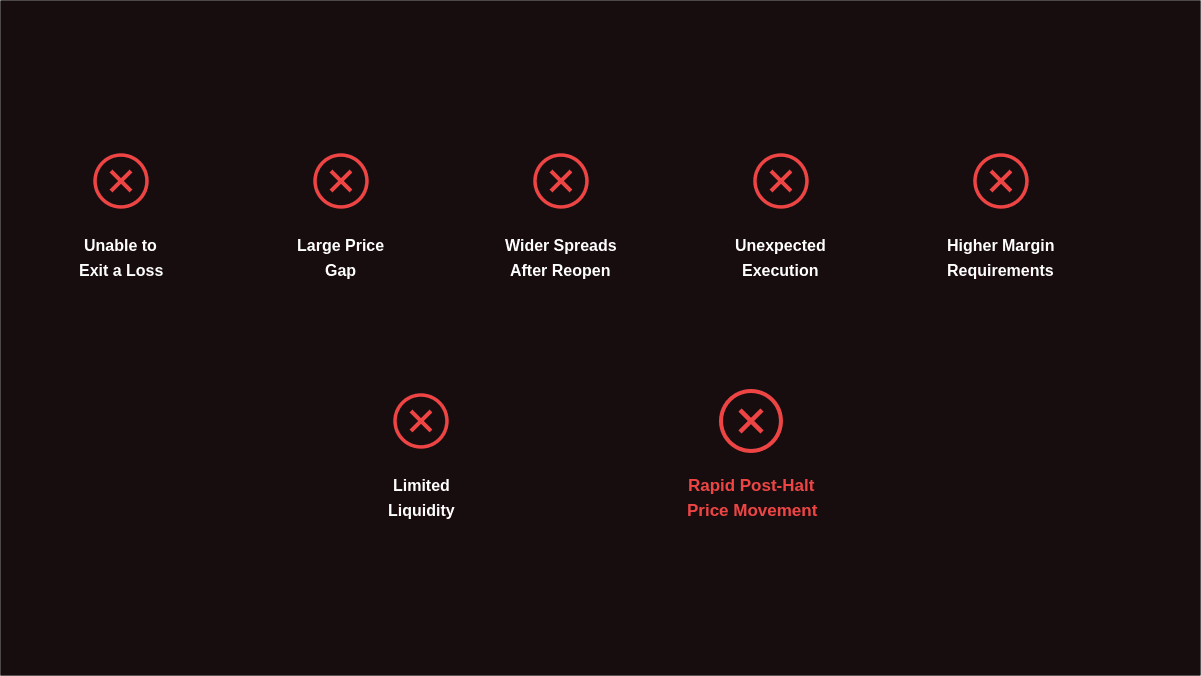
Trading halt risks are largely connected to uncertainty around execution and price discovery.
Key risks include:
- Being unable to exit a losing position
- A large price gap when trading resumes
- Wider spreads after reopening
- Unexpected order execution
- Increased margin requirements
- Limited liquidity
- Rapid price movement immediately after the halt
A stop order also should not be treated as an absolute guarantee against losses. If the market reopens beyond the stop price, the eventual execution price can differ materially from the intended trigger level.
How to Manage an Open Position Before a Potential Halt
Traders cannot always predict when a halt will occur, but they can manage the exposure surrounding positions that may be particularly sensitive to company news or unusual volatility.
Useful practices include:
- Check the reason for unusual price activity before opening a position.
- Understand your broker's trading halt procedures and order handling rules.
- Review position size relative to the account's available capital.
- Avoid assuming a stop order guarantees an exit price.
- Monitor margin requirements when using leverage.
- Plan for multiple reopening scenarios, including a substantial move in either direction.
- These steps do not eliminate the possibility of a halt, but they can make the potential consequences easier to evaluate.
What Should Traders Check When Trading Resumes?
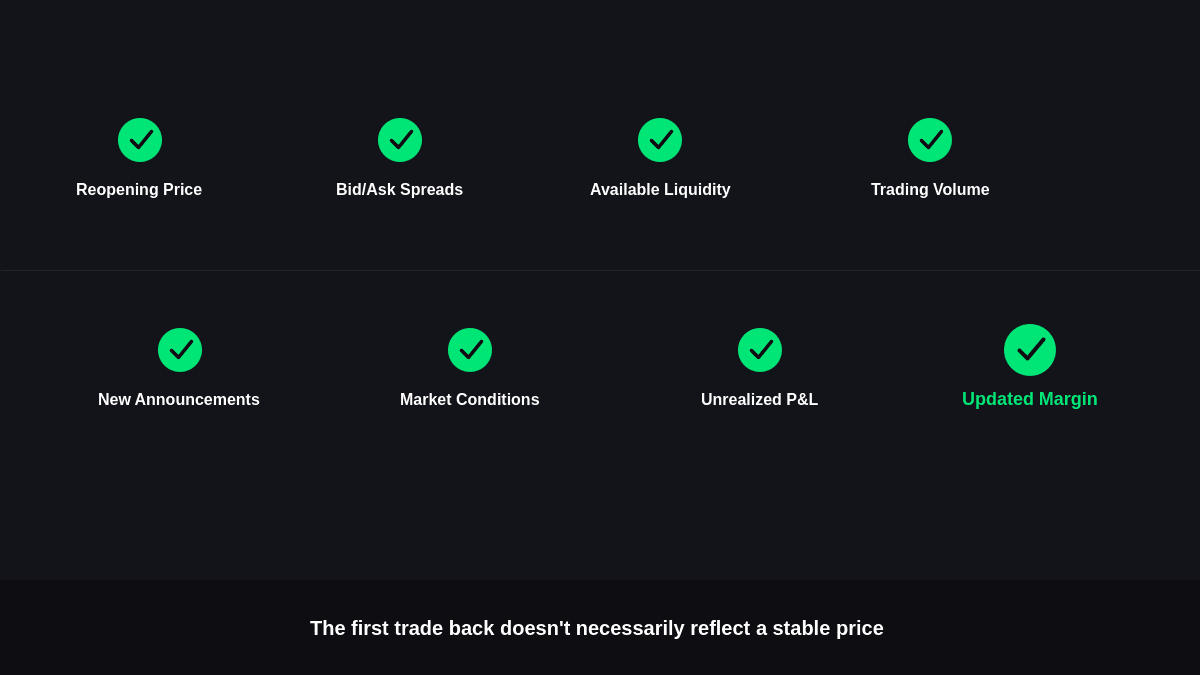
The first transaction after a halt does not necessarily represent a stable market price.
Before making another decision, traders can examine:
- The reopening price
- Bid and ask spreads
- Available liquidity
- Trading volume
- New company announcements
- Changes in market conditions
- Their current unrealized profit or loss
- Updated margin requirements
This helps separate the immediate reaction from the broader information that caused the suspension.
Conclusion
Trading Halts can temporarily remove a trader's ability to manage an open position while leaving the underlying exposure intact. The most important issue is what happens when trading resumes, because the security may reopen at a materially different price.
Reviewing backtesting metrics alongside order handling, position exposure, liquidity, and Trading Halts can help traders assess the risks associated with being unable to transact during a market interruption.