High-Frequency Trading (HFT) is an automated method of trading using advanced algorithms, powerful computers, speed, and real-time data about markets in order to detect and trade in very short periods of time. HFT enables making, modifying, and canceling numerous trades without direct human intervention.
Its objective is normally to profit from short-lived opportunities related to price gaps, spread, liquidity, or correlation. High-frequency trading firms are typically proprietary traders, banks, market makers, and other financial organizations that have the required technological resources and access to markets to carry out such types of trading.
This guide will assist you in comprehending the meaning of HFT and how it works; it will provide you with certain information about HFT strategies, technology, pros and cons.
What Is High-Frequency Trading and How Does It Work?
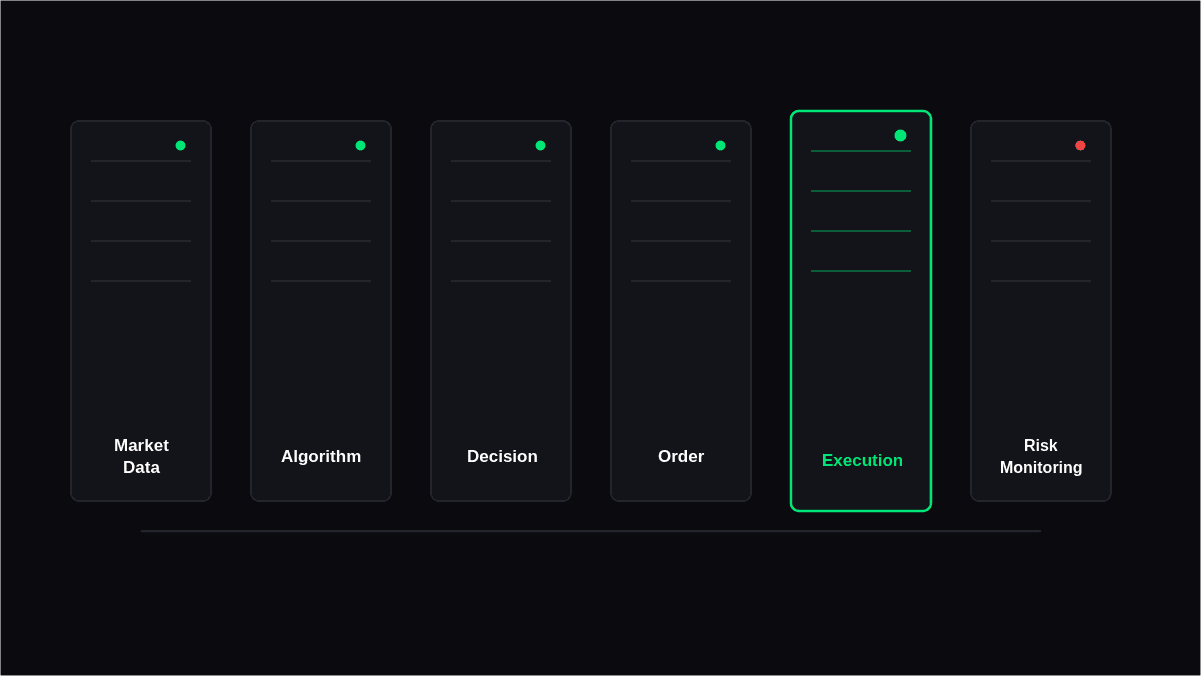
High-Frequency Trading is a method of trading that employs computer programs and algorithms that analyze real-time market data to make trades very quickly. Unlike traditional investment strategies, which involve holding securities for several months or years, HFT systems enable the analysis of market data, decision making, placement of trades and position management with little or no human interaction.
Some of the distinctive features of HFT include automation, high frequency of trades, short holding periods, real-time data and fast execution. The general process involves the following steps:
1. Analyze Real-Time Market Data
High-Frequency Trading systems constantly take inputs from various sources including prices and trade executions for buy and sell, orders on order books, market depth, and messages from the exchanges. HFT systems may also use volume analysis to assess trading activity and identify short-term changes in market conditions.
Based on analysis done through algorithms, short-term opportunities are identified in terms of arbitrage, changes in liquidity, and statistical relationship.
2. Generate and Execute Orders
Whenever an opportunity for trading arises and satisfies certain criteria, then the algorithm initiates a new order and submits it at the exchange.
3. Monitor Positions and Risk
The system is constantly monitoring positions, exposures, losses, order flow, and the technical environment. The pre-defined risk thresholds may limit or even halt trading under abnormal circumstances.
Basic HFT workflow:
Market Data → Algorithm → Trading Decision → Order → Execution → Risk Monitoring
Technology Behind High-Frequency Trading
HFT depends on advanced technology infrastructure capable of analyzing the market and executing orders in a minimal amount of time.
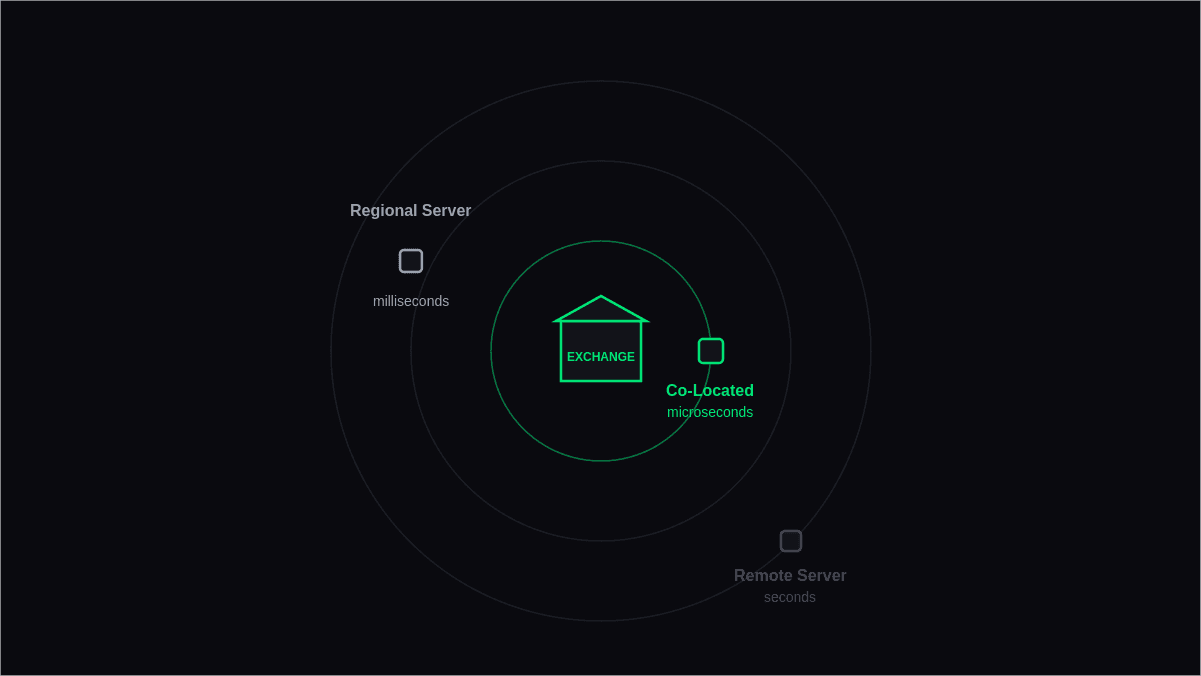
Low-Latency Networking and Co-Location
The use of low latency networks helps in reducing the time that market data and trading instructions take. In addition, some companies employ the strategy of colocation where servers are placed near exchange infrastructure, minimizing the distance that market data and orders travel.
High-Performance Hardware, Software, and Market Data
The HFT systems have specialized servers, efficient software, optimized code, and market data feeds to analyze huge chunks of data. Good market data is important since good technology infrastructure cannot make up for bad market information.
Common High-Frequency Trading Strategies
High-Frequency Trading Strategies depend on the markets they operate in, the purpose of trading, data, and execution techniques. Some of the popular HFT strategies include:
Market Making
Market making strategy entails offering quotes for buying and selling and making profits through the bid-offer spread.
Statistical Arbitrage
Statistical arbitrage is based on the use of mathematics in identifying the relationships that exist between different securities for some time.
Latency Arbitrage
Latency Arbitrage seeks profits by exploiting extremely temporary discrepancies in market information or pricing due to processing speed disparity.
News-Based Trading
News-based algorithms rely on structured news and market data to detect predetermined signals or events and then act accordingly according to trading rules.
Cross-Market Arbitrage
Cross-market arbitrage works with the same instrument on two or more exchanges. In the case when there is a price discrepancy for a while, the program can try to buy the asset on one market and then sell it on another one.
High-Frequency Trading vs. Algorithmic Trading
High-frequency trading and algorithmic trading are closely related, but they are not identical.
| Factor | High-Frequency Trading | Algorithmic Trading |
|---|---|---|
| Speed | Extremely high | Varies |
| Trade frequency | Often very high | Low to high |
| Holding period | Usually very short | Seconds to months |
| Technology | Highly specialized | Varies |
| Latency sensitivity | Very high | Strategy dependent |
| Automation | Extensive | Partial to full |
| Main focus | Short-term opportunities and speed | Automated decisions and execution |
Algorithmic trading is the general term. High-Frequency Trading is a particular type which stresses speed, frequency, low latency, and quickness.
As an illustration, a trader may utilize an algorithm for buying stocks over a period of time. This would be an example of algorithmic trading but would not fall under HFT.
Benefits and Risks of High-Frequency Trading
While HFT could be seen as helping towards market efficiency, it poses many financial, technological and operational difficulties.
Potential Benefits
HFT could help in:
- Improving liquidity in certain markets
- Enabling narrow bid/ask spreads
- Improving speed of price formation
- Order automation
- Quick reaction of the market to news
However, it depends on certain conditions.
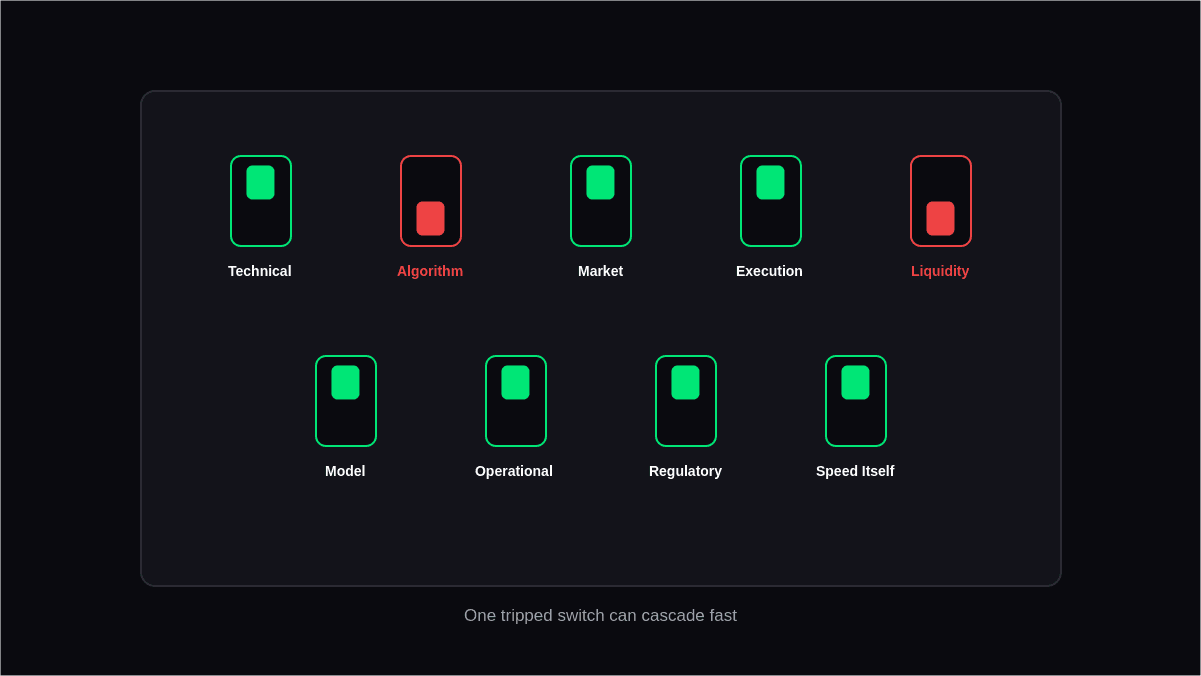
Key Risks
These include:
- Technical risk: Issues in hardware, software, or network can interrupt trade.
- Algorithm risk: Errors in coding or algorithms can lead to unexpected trade order.
- Market risk: Fast price changes can result in losses.
- Execution risk: Orders can fail to be executed at the right prices.
- Liquidity risk: Liquidity available can disappear in stressed markets.
- Model risk: Statistical models can generate incorrect signals.
- Operational risk: Problems with data, monitoring, and infrastructure can impact trade.
- Regulatory risk: Compliance with market rules and regulations is required.
Given that the automated system is able to process trades very fast, even a minor glitch can cause multiple orders before the issue is detected.
Is High-Frequency Trading Profitable?
High frequency trading is profitable, although success in this area hinges on the quality of the strategy employed, cost HFT strategies should be evaluated using appropriate trading strategy benchmarks, including returns, drawdown, trading frequency, costs and performance across different market conditions of execution, technology, infrastructure, market access, funding, and market conditions.
Gains from single transactions can be very minimal, meaning that transaction costs and the quality of the trade execution become critical. Competition in this field is very stiff due to its high profitability.
Speedier transactions alone cannot guarantee profitable trading. A poor trading strategy just gets executed faster and hence the need for analysis, testing, and risk management.
Conclusion
High-frequency trading is an approach that integrates algorithms, real-time market data, special infrastructure, and fast execution to generate opportunities in the financial markets. High-frequency trading requires more than just fast transactions; companies need effective strategy, efficient technology, accurate information, execution capabilities, and risk management.
FAQs
What Is High-Frequency Trading and How Does It Work?
It employs advanced software, up-to-date market information and sophisticated technologies in order to make decisions and complete trades within very brief periods of time. The trading systems are capable of making assessments of market conditions and placing orders automatically.
What Are the Potential Risks of High-Frequency Trading?
Some of the main risks involve technological breakdowns, computational errors, market fluctuations, liquidity fluctuations, execution risks, modeling risks, operational risks, and regulatory risks. Monitoring and risk management are vital in HFT since these systems can trade at an incredibly fast pace.
How Does High-Frequency Trading Make Money?
There are several ways through which high-frequency trading firms can profit from these strategies, including market making, statistical arbitrage, latency arbitrage, and cross-market arbitrage. Since each individual transaction will result in a small profit margin, then execution costs and technology will matter greatly.
What Technologies Are Used in High-Frequency Trading?
This allows HFT to utilize low-latency networks, co-location, advanced hardware, optimized software, live market data feeds, automated orders, and risk management facilities to process information and execute transactions efficiently.
Can Individual Traders Use High-Frequency Trading?
Individual traders may gain access to certain algorithmic trading systems, however, institution-level HFT often involves much more significant infrastructure, market access, data quality, technology, funding, and technical expertise.