When a trade is executed, the transaction is not necessarily finished. Clearing vs Settlement refers to two separate stages that help move a completed trade from execution toward final ownership and payment.
Although the terms are often used together, they perform different functions within the financial market infrastructure.
Understanding these stages is important because each one addresses a different part of the transaction. Clearing focuses on determining what each party owes and managing the obligations created by the trade, while settlement completes the actual exchange of assets and funds.
This distinction is also relevant when considering Market Orders vs Limit Orders and how trades are executed.
What Is Meant by Clearing and Settlement?
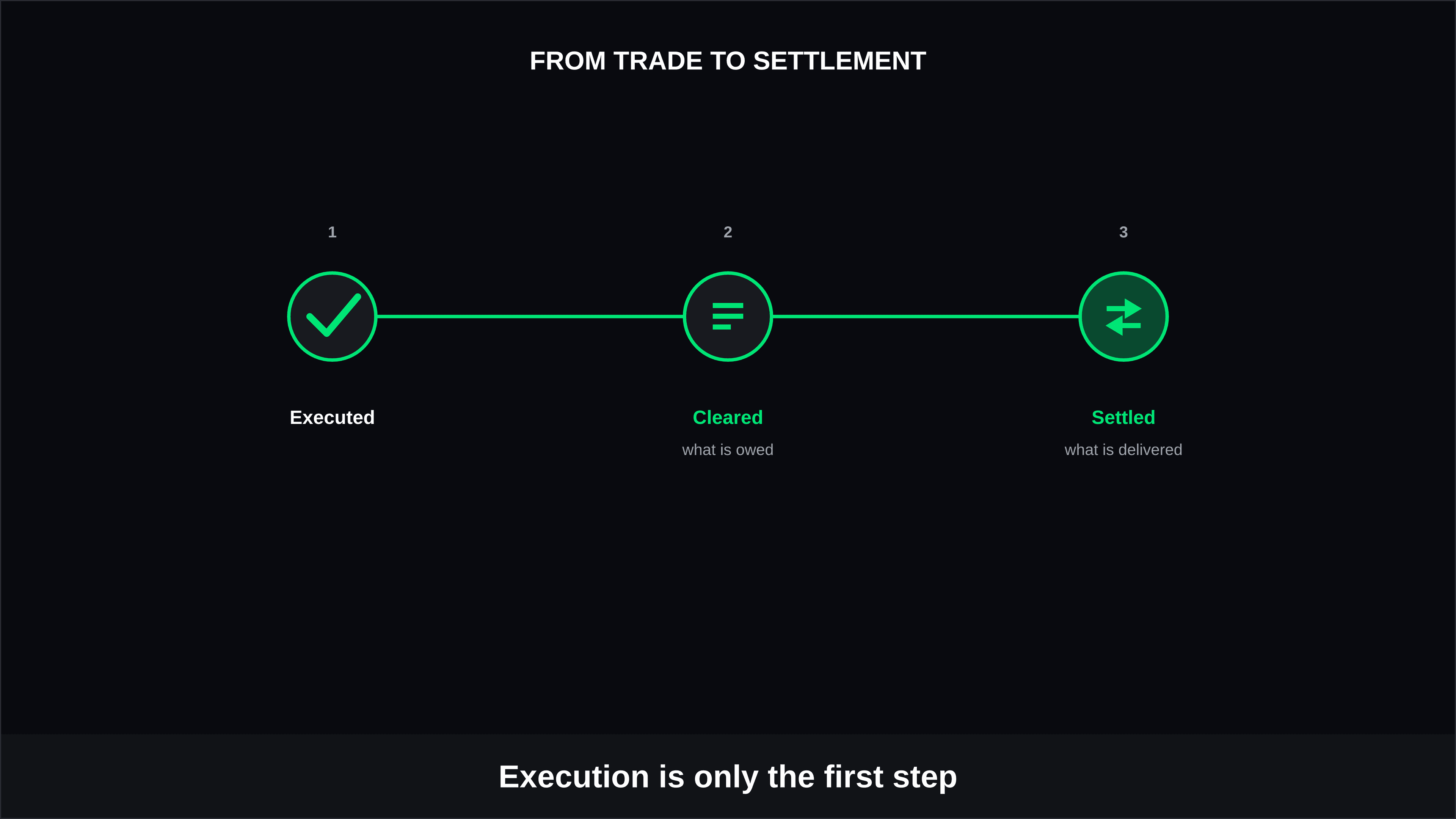
Clearing and settlement work together, but they are not interchangeable. The first organizes and manages the obligations resulting from a trade, while the second brings those obligations to their final completion.
What Is Clearing?
Clearing is the process that takes place after a trade is matched and confirms the obligations of the buyer and seller. It helps establish how much money or how many securities must be delivered and can involve risk-management measures.
Key activities may include:
- Confirming the details of executed trades
- Calculating obligations between participants
- Netting multiple transactions where applicable
- Managing collateral or margin requirements
- Reducing counterparty exposure through clearing arrangements
What Is Settlement?
Settlement is the stage where the agreed exchange actually occurs. The buyer provides the required funds, while the seller delivers the relevant security or asset according to the transaction terms.
The Settlement Process generally involves:
- Transfer of securities or other financial assets
- Transfer of payment to the seller
- Updating ownership records
- Completing the parties' outstanding obligations
- Finalizing the transaction according to market rules
Clearing vs Settlement: Understanding the Core Difference
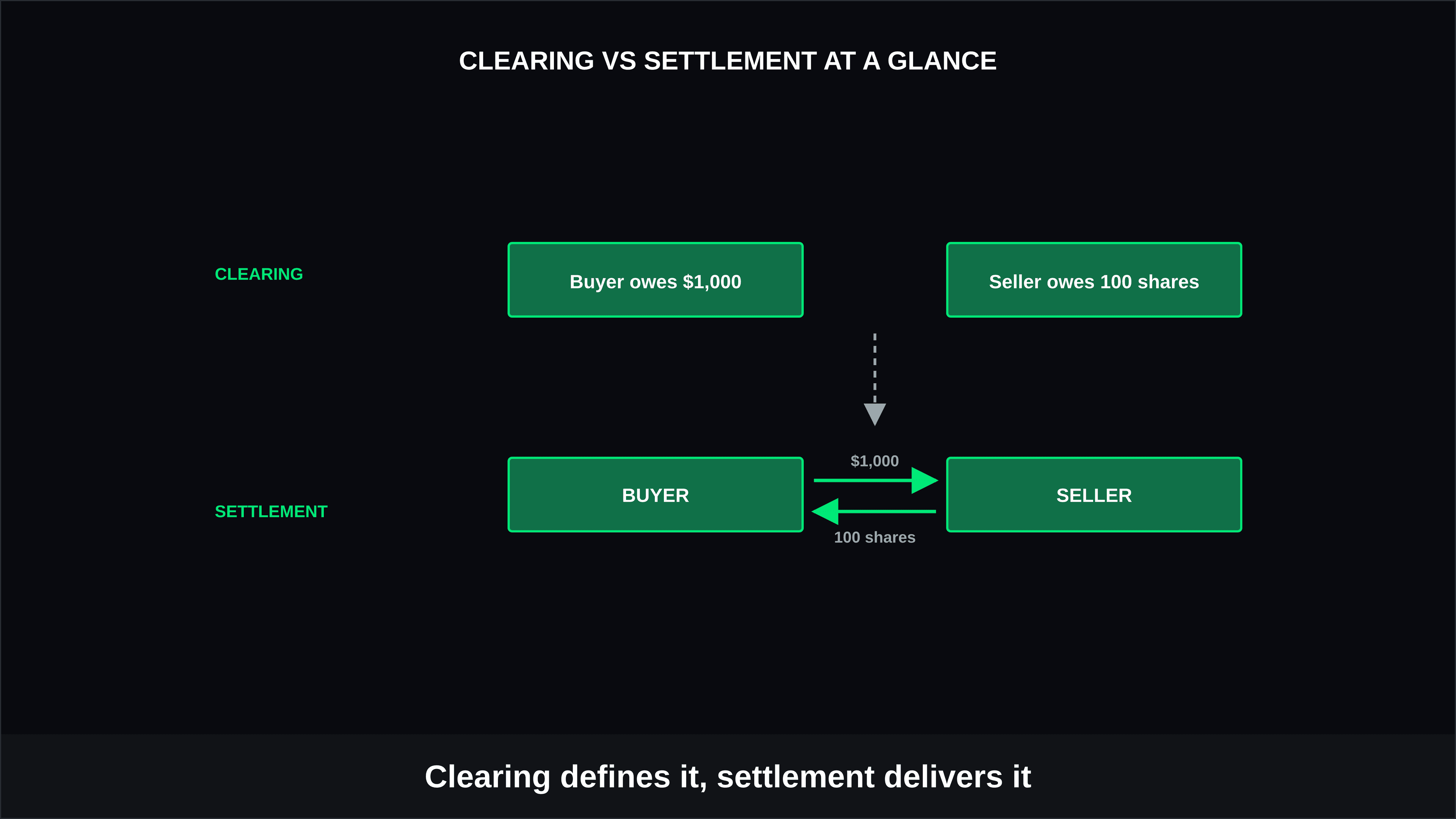
The easiest way to distinguish them is to consider their roles in the transaction. Clearing determines and manages what must be delivered, whereas settlement is when those obligations are fulfilled.
| Aspect | Clearing | Settlement |
|---|---|---|
| Primary purpose | Determines and manages trade obligations | Completes the exchange of assets and funds |
| Main focus | Risk, obligations, and transaction preparation | Final transfer and completion |
| Timing | Generally occurs before settlement | Follows the clearing stage |
| Key activities | Confirmation, calculation, netting, collateral management | Payment and asset delivery |
| Main outcome | Parties know what they owe | Obligations are discharged |
| Risk addressed | Helps manage counterparty and exposure risk | Addresses completion and delivery risk |
In practical terms, clearing prepares a transaction for completion, while settlement represents the point at which the financial exchange is finalized. Both stages are essential to an orderly market.
5 Main Differences You Must Know About Clearing vs Settlement
The distinction becomes clearer when the two stages are compared by their specific responsibilities. These differences explain why a trade can be successfully executed but still remain unsettled.
1. Their Primary Functions Are Different
Clearing organizes the financial obligations created by a transaction. Settlement deals with fulfilling those obligations.
- Clearing calculates what each participant must provide.
- Settlement transfers the required funds and assets.
- Clearing therefore prepares the transaction for completion.
- Settlement closes the remaining obligation.
2. They Occur at Different Points in the Trade Lifecycle
The two processes occupy separate positions after a trade is executed.
- Clearing generally takes place before final settlement.
- Settlement comes after the relevant obligations have been established.
- The timing between execution and settlement depends on the market.
- A trade can therefore be executed and cleared without being settled immediately.
3. Risk Management Plays a Larger Role in Clearing
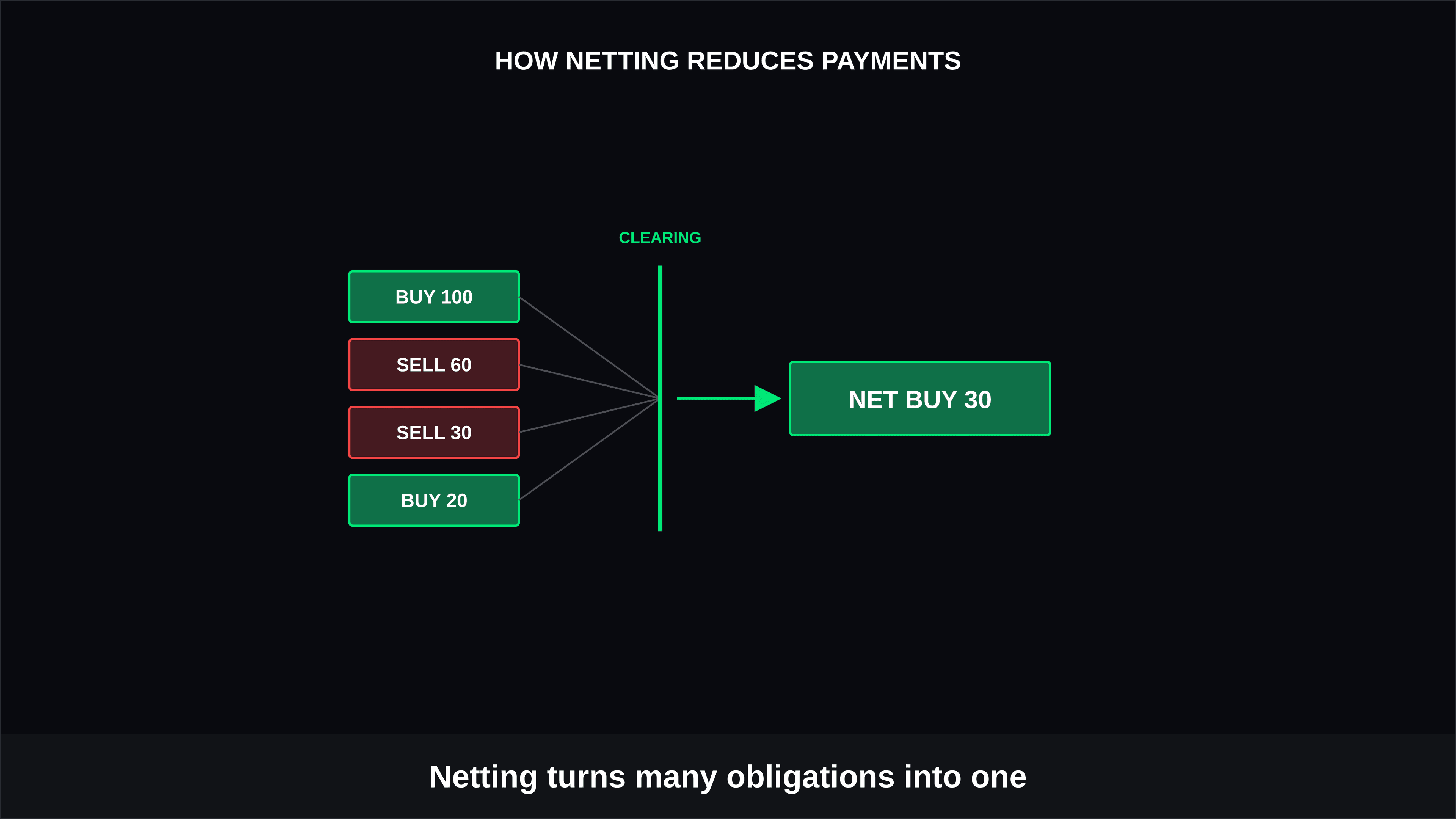
Clearing can involve mechanisms designed to control the financial risk associated with participants' obligations.
- Clearing arrangements may require collateral or margin.
- Netting can reduce the number or value of payments that need to be made.
- Clearing houses can provide structured processes for managing counterparty exposure.
- Settlement primarily focuses on completing the transaction rather than calculating those obligations.
4. The Parties Handle Different Responsibilities
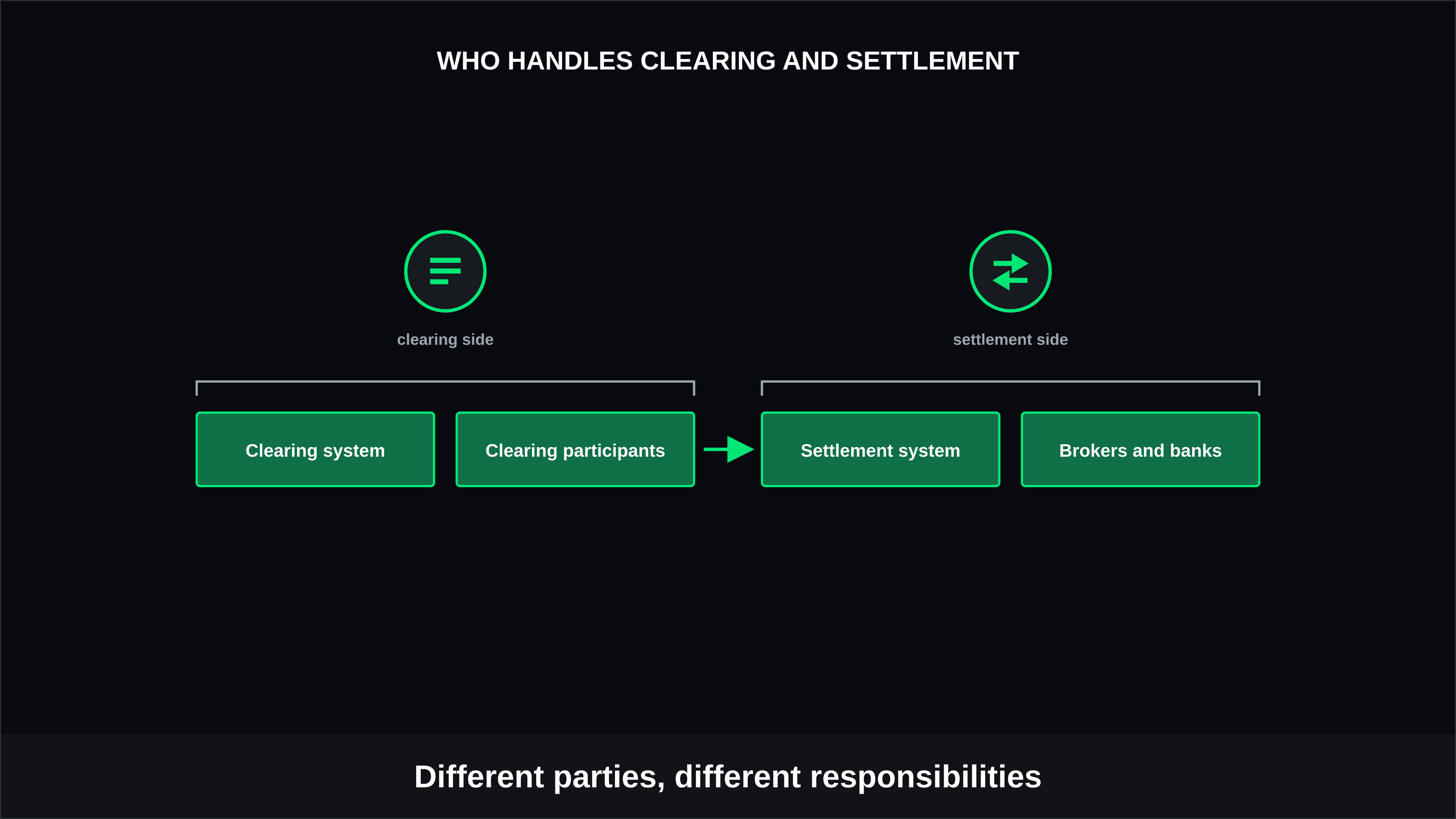
Clearing and settlement involve different operational responsibilities across the market infrastructure.
- Clearing systems determine and manage obligations.
- Clearing participants may have responsibilities related to margin and collateral.
- Settlement systems facilitate the delivery of securities and payment.
- Custodians, brokers, banks, and other financial institutions may participate in the settlement process.
5. Their Final Outcomes Are Not the Same
The result of clearing is a defined set of obligations, while settlement produces the final exchange.
- Clearing establishes what must be delivered or paid.
- Settlement carries out that delivery and payment.
- A cleared transaction can still be awaiting completion.
- A settled transaction has reached the end of its required exchange.
Conclusion
Understanding Clearing vs Settlement makes the post-trade lifecycle much easier to follow. Clearing determines and manages the obligations created by an executed transaction, while settlement completes those obligations through the transfer of assets and funds.
This process ultimately supports trade confirmation by ensuring the transaction details and resulting obligations are properly handled.
Although the processes are closely connected, they serve distinct purposes. Knowing where each stage fits can help traders, investors, and market participants better understand how transactions move from execution to final completion.