Automated trading strategies make it possible for traders to implement their own predefined rules of the markets in systems which will then monitor the situation and perform trades without requiring much human interference. Instead of constantly watching charts, traders set criteria for entry, risk management, and exit from a trade.
Automation increases the consistency of the approach, yet it doesn’t guarantee profits by itself. Inefficient rules may generate losses just as well as efficient rules can make deals. What we should be looking for is the development of a system that is reasonable, measurable, and suitable for the chosen market.
What Are Automated Trading Strategies?
Automation is an approach in which computers analyze the information and act on the market on the basis of predefined rules.
For example, one may define:
- Which markets to trade
- When a setup is valid
- Under what circumstances a trader should enter
- Where to put the stop-loss
- When to take profits
- How much money to risk
- When to stop trading
What is crucial is the difference between automation and strategy development. The former takes care of the execution; the latter is about defining the logic of a system.
How Automated Trading Strategies Work
An automated system generally connects market data, trading rules, risk controls, and order execution into one workflow.
| Component | Purpose | Example Consideration |
|---|---|---|
| Market data | Supplies information to the system | Price, volume, volatility |
| Signal logic | Identifies potential trades | Breakout or moving-average condition |
| Risk management | Controls exposure | Position size and stop-loss |
| Execution | Sends or manages orders | Market or limit order |
| Monitoring | Tracks system behavior | Errors, fills, and performance |
| Evaluation | Measures results | Drawdown, return, and consistency |
The reason is to make the various roles of a trading strategy distinct. A signal should not be burdened with making all decisions. Entry logic, position sizing, and risk management must have clearly specified roles.
Automated Trading Strategies vs. Manual Trading
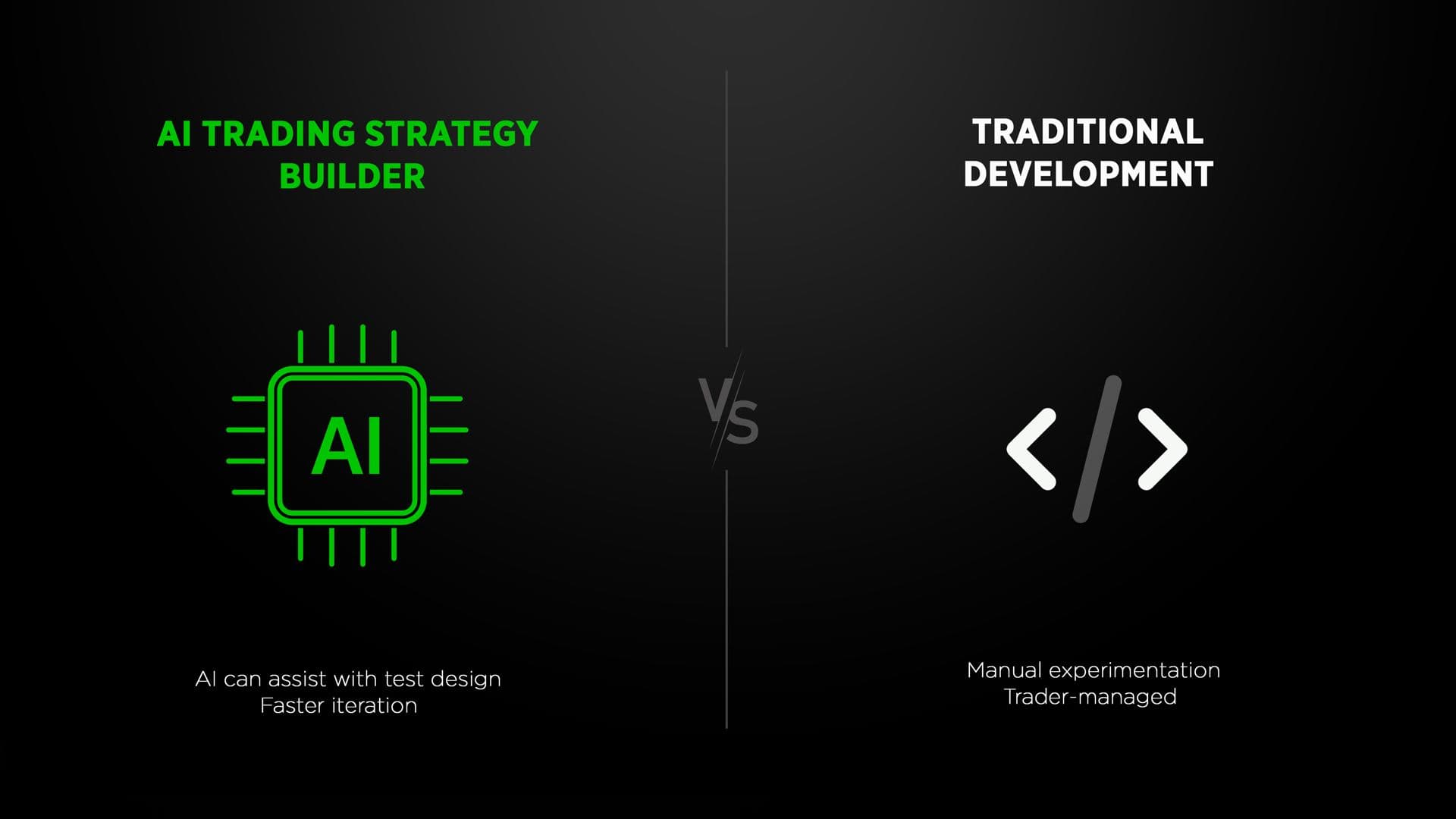
Both methods are capable of being effective, but what distinguishes the two is the process involved in decision-making, implementation, and supervision. The best method to use will be determined by the trading style of the trader.
| Factor | Automated Trading | Manual Trading |
|---|---|---|
| Decision-making | Rule-based | Judgment-based |
| Execution | Automatic | Trader-controlled |
| Consistency | Highly consistent | Can vary |
| Emotions | Reduced influence | Greater influence |
| Flexibility | Limited to programmed rules | Highly flexible |
| Speed | Fast and systematic | Depends on trader |
| Best for | Repeatable strategies | Discretionary setups |
Common Types of Automated Trading Strategies
Different strategy families attempt to capture different market behaviors.
Trend-Following Systems
Such systems strive to join in the ongoing directional moves. These could employ moving averages, breakouts, or momentum analysis to pick up on emerging trends.
The problem with them is that sideways markets can produce many false signals.
Mean-Reversion Systems
Mean reversion strategies have the basic premise that price can revert back to some level after going too far from it.
Although such strategies may behave differently than trend following strategies, they will have difficulty if the market begins a trending move without reverting back to its previous range.
Breakout Strategies
Breakout systems search for the price to break out of the defined support, resistance, or trading range.
The biggest difficulty lies in differentiating real breakout from a fake one.
Momentum-Based Strategies
Systems of momentum concentrate on assets displaying strong directional trends or momentum. Their performance may significantly differ under certain market circumstances and liquidity and the timeframe employed.
These systems are a type of an algorithmic approach, but the rule is similar for other strategies as well: the rules must be clear enough to evaluate them consistently.
What Makes an Automated Strategy Reliable?
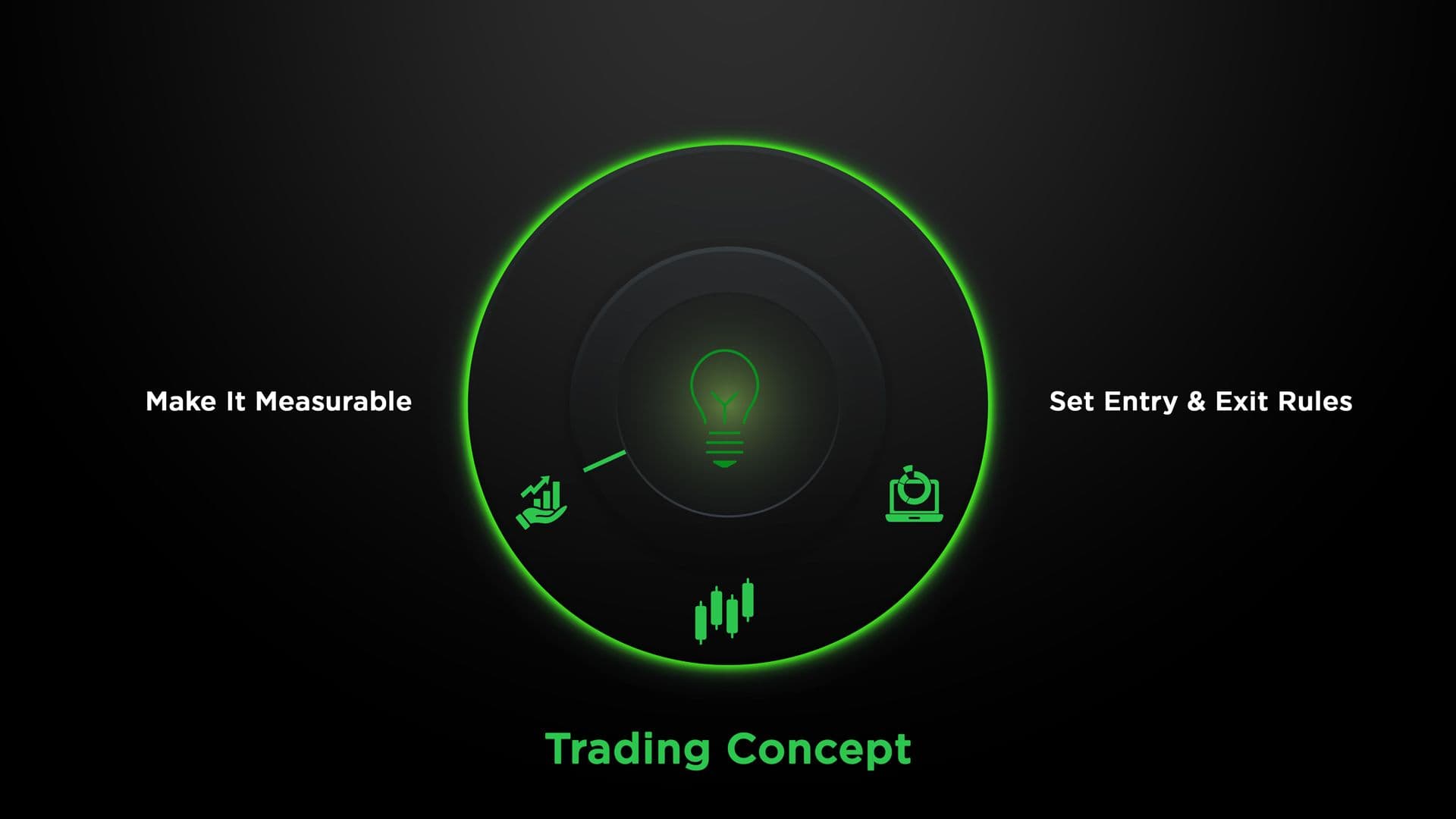
It is not the system with the highest return that qualifies as a good one; a more robust approach involves an assessment of whether the system behaves normally in various environments.
The following aspects can be included here:
- Well-defined rules
- Prudent risk management
- Reasonable assumptions about implementation
- Good back-testing based on history
- Testing out-of-sample
- Drawdown management
- Parameter dependence
- Non-concentration of performance into one anomalous period
If a system works only when several dozen well-tuned parameters are added to it, the system may be over-fitted rather than robust.
Testing Before Using Real Capital
Backtesting is a key step in the development of automated trading systems. While past performance might give insight into how the rule set performed in certain market conditions, this is not evidence of the rule set's success in future performance.
Factors that have an effect on backtest results include:
- Transaction costs
- Bid-ask spreads
- Slippage
- Position sizing
- Market liquidity
- Delay in execution
- Company actions where necessary
Following backtesting of the historical data, traders may test the strategy further using data other than that used in the design of the strategy.
Risks Traders Should Understand
While automation reduces the likelihood of some human errors, it poses its own risks due to technical and design issues.
First, a system may perform badly since the strategy used lacks a sustainable edge. Secondly, the system may face difficulties due to wrong data, network failure, failed trades, programming faults, or market changes.
A third risk is that of over-optimization where the trader keeps changing the parameters until good historical results are attained.
Trading strategy automation, therefore, needs both trading skills and operational control.
How to Evaluate an Automated Strategy
Before using any system, ask practical questions instead of looking at the returns alone.
What kind of market action is the system designed to catch?
Is every trade that is placed based on an objective criterion?
How does performance vary under different market conditions?
What is the largest drawdown that can be tolerated?
Have transaction costs been included and are the trades realistically executable?
Does the system still make sense if tested on unknown data?
What if the system behaves unexpectedly?
These are all questions that move the focus away from impressive backtests to usability and robustness.
Final Thoughts
Automated trading strategies could help make the trading process more systematic through transforming clear decisions into a repeatable process. The benefit of automated trading strategies is achieved through consistent implementation, rules-based and risk-controlled approaches rather than simple automation.
In order to develop an automated trading strategy, one should start with having a trading hypothesis, setting up conditions for trading, testing the conditions under realistic market scenarios, and analyzing how the trading strategy operates in the new environment. Prior to putting the strategy into live trading, the trader should take into account all operational risks as well as changing market conditions.
In other words, the optimal automated approach would not be necessarily the most complex one, but the one that allows understanding, testing, monitoring, and maintaining without making unrealistic assumptions.
FAQs
1. What are automated trading strategies?
In automated trading strategies, trading rules based on technical criteria are used to evaluate market conditions and take predefined actions by the computer program, such as entering, controlling, and exiting trades.
2. Are automated trading strategies profitable?
These strategies may prove to be profitable, but there is no absolute guarantee that they will always make money, depending on the robustness of the underlying trading concept, risk management, etc.
3. What is the difference between algorithmic and automated trading?
The two terms are often interrelated. Algorithmic trading usually denotes trading done through programmed algorithms to evaluate or execute the transactions, whereas automated trading is focused on minimizing manual intervention in the trade execution process.
4. Why is backtesting important?
Backtesting provides the traders with information about how the strategy would have performed with the use of historical data. Backtesting highlights drawbacks and market dependencies of a certain strategy.
5. Can every trading strategy be automated?
Not necessarily. Automation is usually more straightforward for strategies that are based on conditions that can be easily measured. Strategies that are very dependent on interpretation or on the news background are not easy to automate.